Papeterie
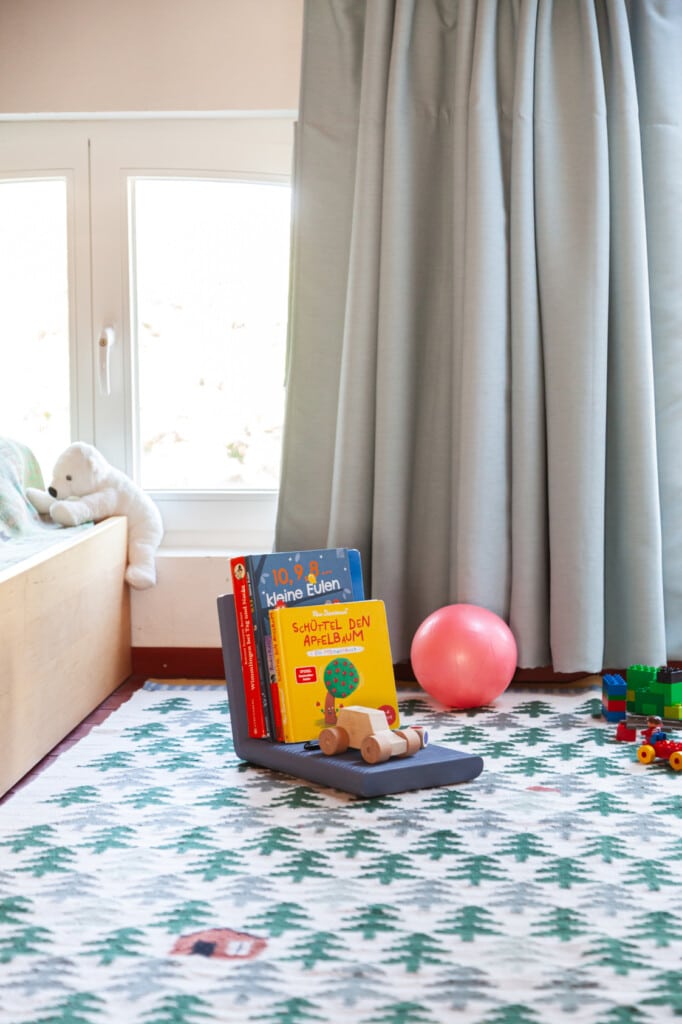
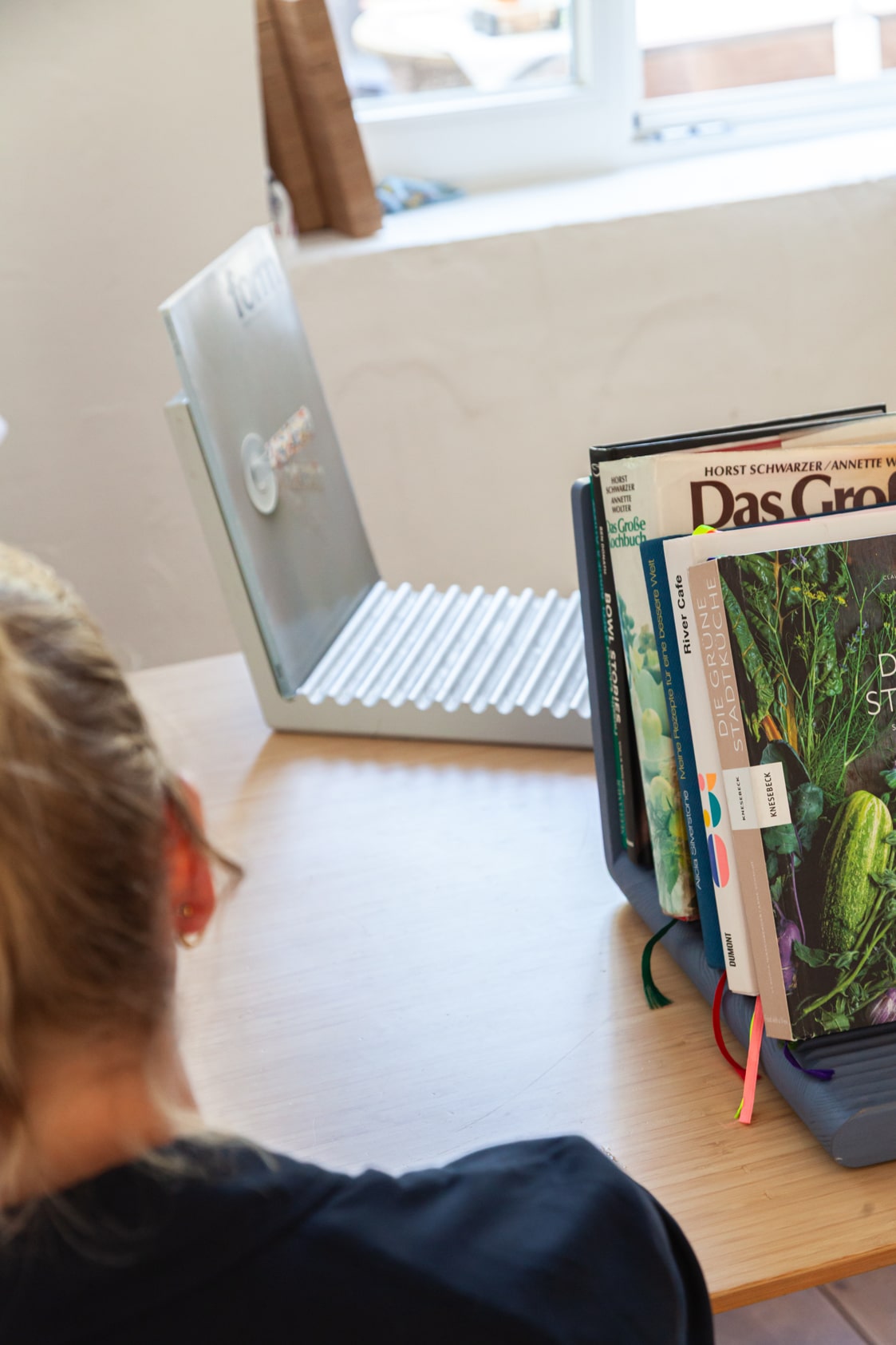
Papeterie sits somewhere between storage and display. Books and magazines don’t disappear out of sight; instead, a small selection is given its own place in the room.
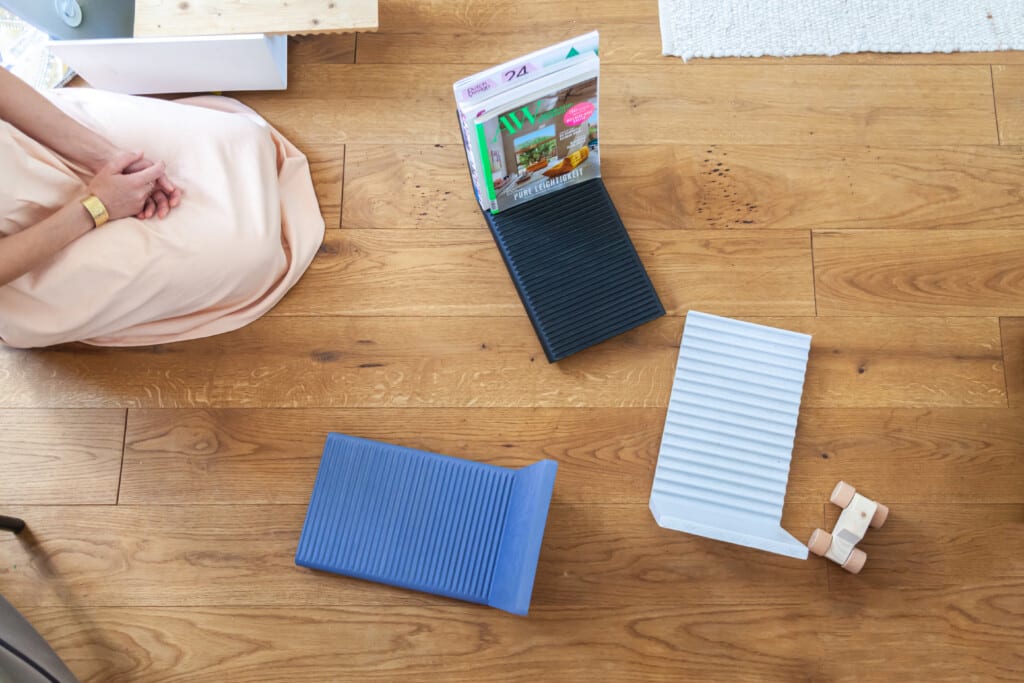
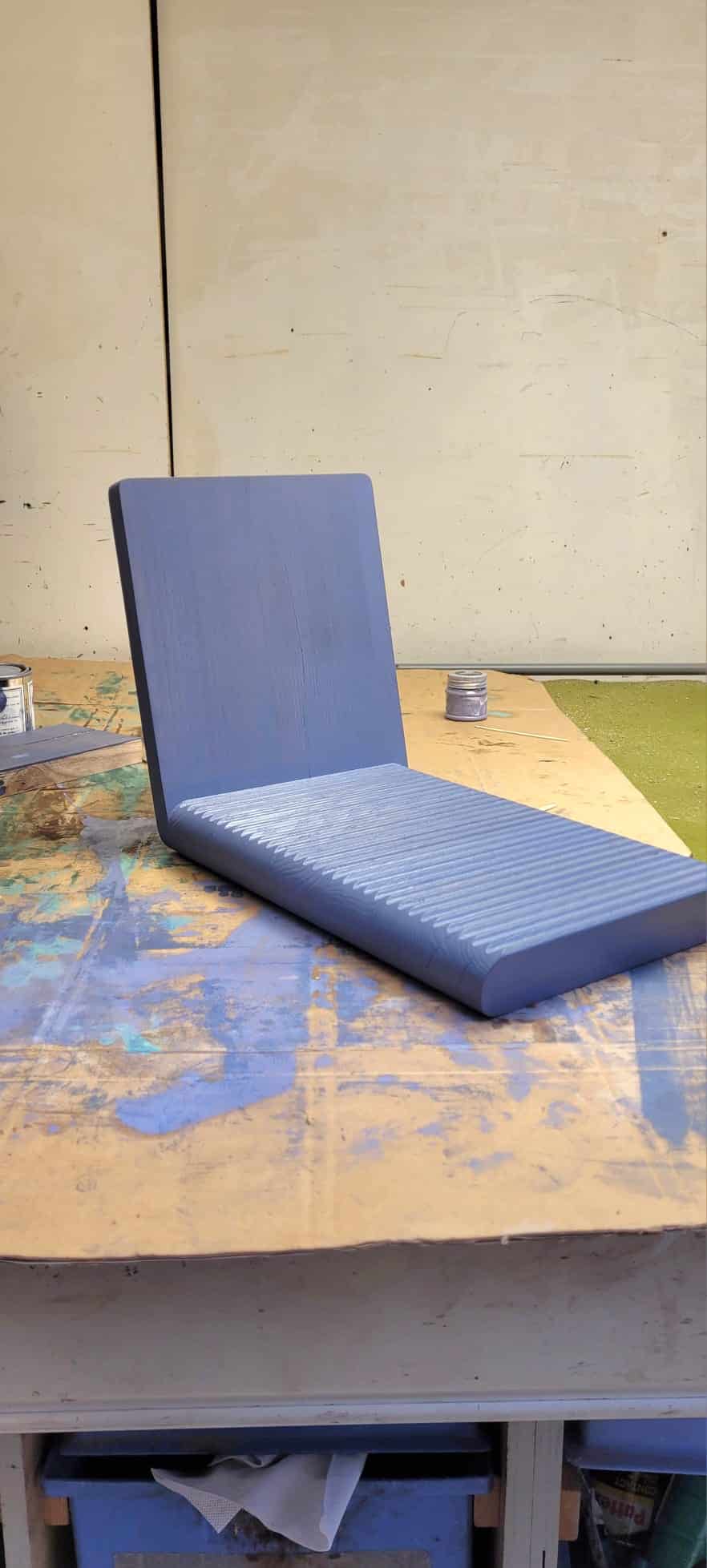
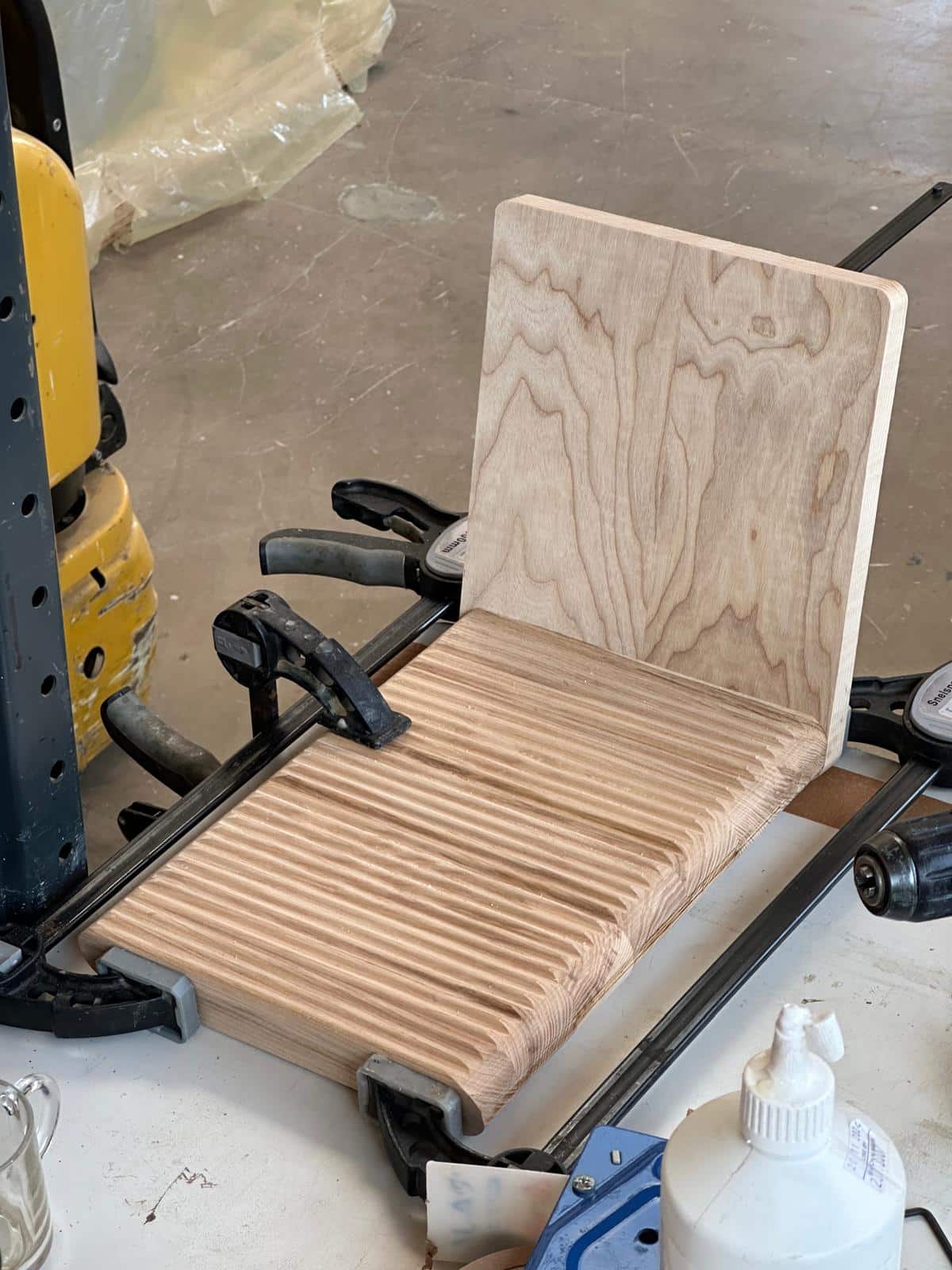
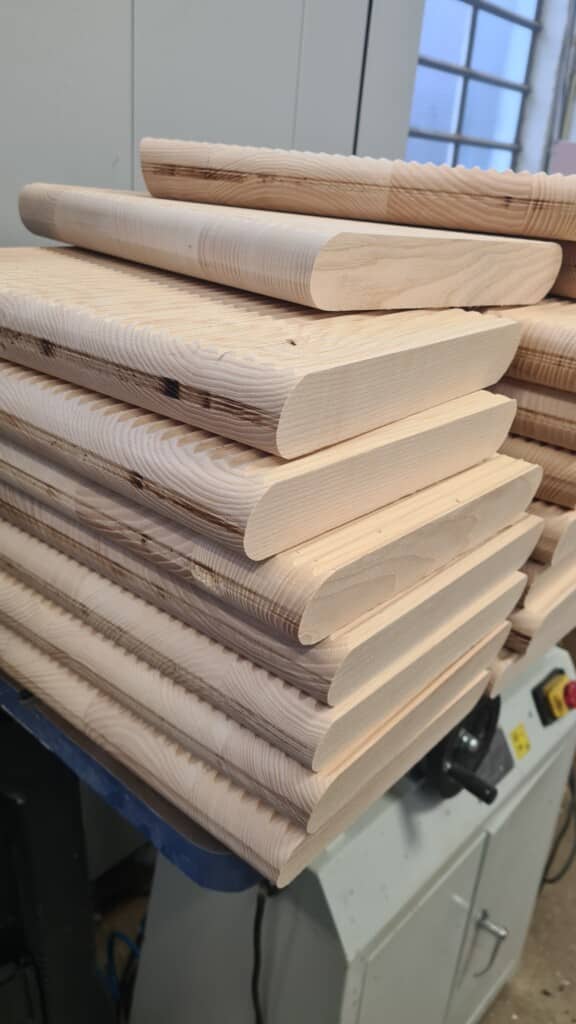
The angled back keeps books and magazines in place, while the ribbed base prevents them from slipping. The ribbed surface also provides space for smaller items such as pens, keys or remote controls.
Papeterie can be used in different places around the home: directly on the floor next to a sofa or lounge chair, on a cabinet, shelf or side table, or in the kitchen for cookbooks you like to keep close at hand. This way, Papeterie naturally finds its place wherever you need it.

Looking for larger quantities or to use this product in a project? Ask for a free quotation here. On our download page, you can find 3d models, high-res images, and other product information.
colour variants
Vij5
steps
of the
Papeterie
Transparency of the production chain comes naturally to us.
For us, that doesn't just mean giving information about where something has been produced. Our chain starts much earlier: with the designer of the product!
We'll tell you the whole story. Click on the buttons to discover the different steps:


DESIGN
Papeterie was designed by Fynn Freyschmidt and Lisa Keller, who work together under the name KellerFreyschmidt. They are based in Viersen, Germany, where they run their joint design studio from home. Lisa also teaches design, while Fynn works on projects for other clients.
Their approach to design is closely connected to everyday life. Ideas often grow out of things they notice around them or something they need themselves. They make models, live with them at home and allow a design to develop step by step. An important part of their approach is that a product should not dictate everything to the user, but leave room for personal interpretation and different ways of using it.
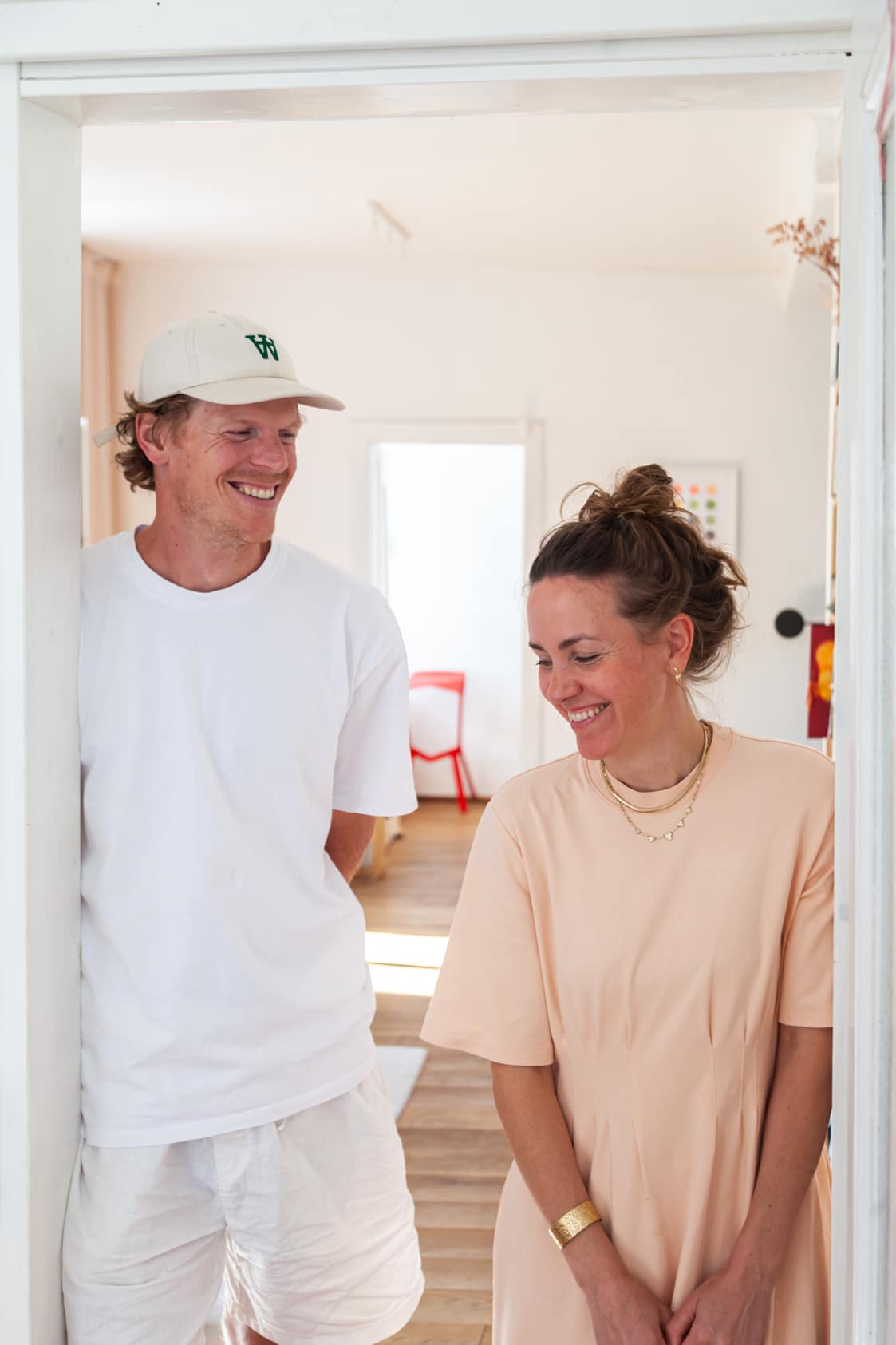
Many of these ideas come together in Papeterie. Fynn and Lisa noticed that books and magazines tend to gather naturally in the places where they are actually used: next to the sofa, beside a chair, on a table or in the kitchen. This observation became the starting point for Papeterie. Rather than constantly putting these piles away in a fixed bookcase, they looked for a simple way to organize them where they were and keep them visible.
They deliberately explored what was minimally necessary for the product to perform this function well, without defining exactly where it should be placed or how it should be used. As a result, Papeterie does not fit neatly into an existing product category. It is neither a bookcase nor a traditional magazine rack, but a freestanding object that gives a small selection of books and magazines a place exactly where you use them.
It is precisely this independent character that makes Papeterie interesting within an interior. It brings order, while also adding something to a room as an object in its own right.
Tip: Take a look inside Fynn & Lisa’s home and learn more about their design philosophy in our Designer Interview on the blog page
“Aspace always needs a few objects that tell their own story, that are just a little different from the rest.”
Fynn Freyschmidt


CURATE
Papeterie has been part of the Vij5 collection since 2026. Our collaboration with Fynn and Lisa started earlier with the product ‘Chaku’. During a visit to their home in Germany, they intentionally showed us several new designs and ideas they were working on. Papeterie was one of them.
The design was already sitting very naturally among their own belongings. That was exactly what appealed to us: it did not feel like a product that had been invented first and still needed a purpose, but like an object that had grown out of everyday use and had already found its place there.
Another thing that attracted us to Papeterie was that it is not necessarily a product you would go looking for. We recognize that quality in several objects within the Vij5 collection: designs you didn’t know you needed. You probably wouldn’t think of looking for an object that organizes a small selection of books and magazines, but as soon as you see Papeterie, it is easy to imagine how and where you would use it. It has a practical function, while also adding something to a room as an object in its own right.
“Papeterie is one of those products you didn’t know you needed. You see it and think: I want that — even though you weren’t looking for anything like it.”
Anieke Branderhorst
Products that invite people to use things in a different way sometimes need a little more context. For us, that makes Papeterie a very natural fit within the Vij5 collection. The design is distinctive and slightly unexpected, without becoming complicated. This is also where we see our role as a publisher: not to adapt a design until it becomes generic or familiar, but to preserve its original character as much as possible and provide the context needed to understand how it can be used and the thinking behind it.


TRANSLATE
When we first saw Papeterie, the basic principle of the prototype was already working. The angled back, the ribbed base and the way the books rest against the rear panel formed a convincing whole. The next step was therefore mainly about refinement.
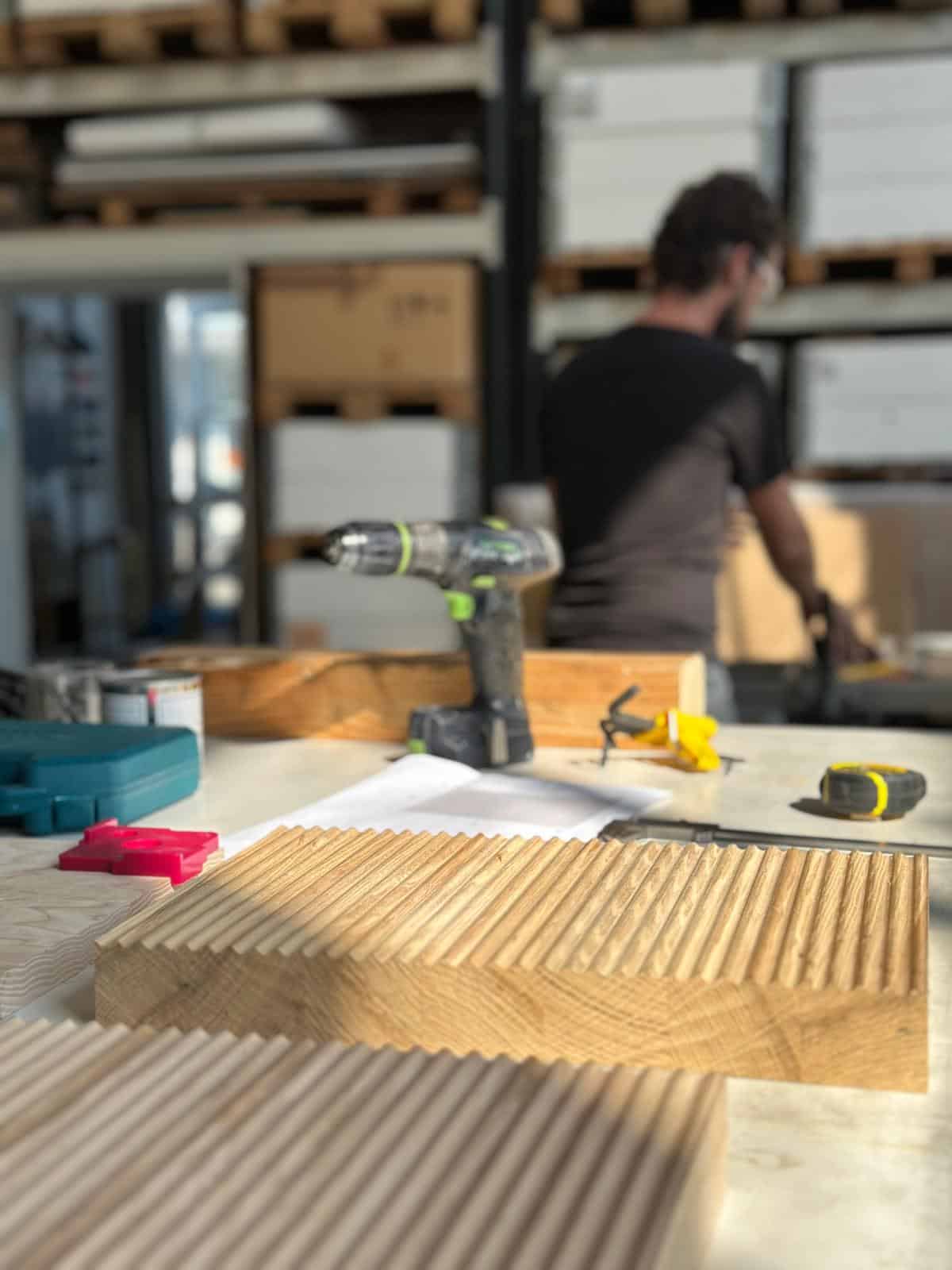
Together, we looked at the proportions, the material thickness and, in particular, the shape and size of the ribs. They needed to provide enough grip to keep books and magazines in place, while remaining subtle enough to accommodate different thicknesses and formats. In the early models, the grooves were much coarser; throughout the development process they gradually became more refined.
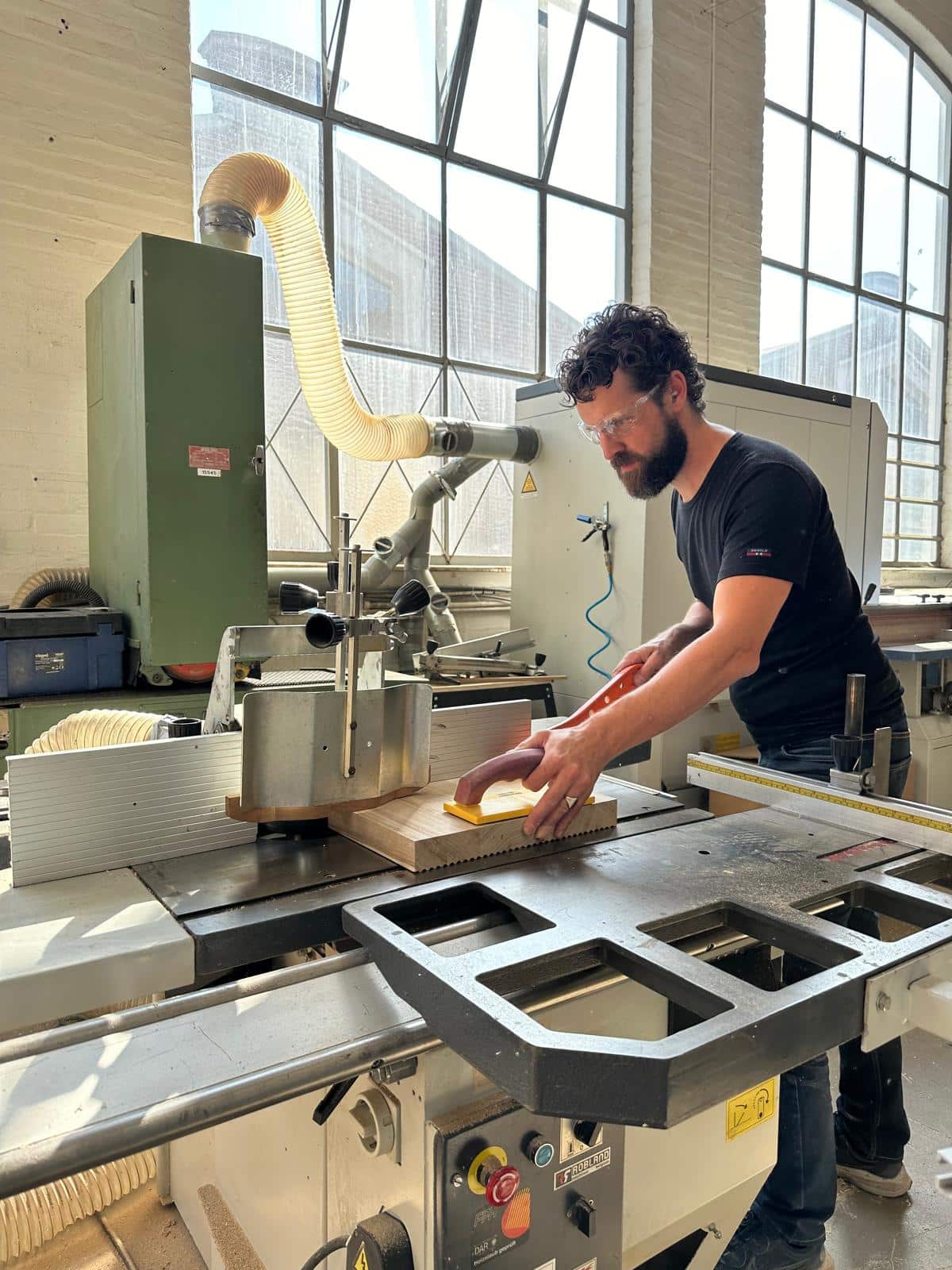
An important detail emerged at the outer edges. Instead of allowing the ribs to stop abruptly, the edges were rounded so that the pattern gradually fades into the surface. It may seem like a small detail, but it gives Papeterie much of its calm and natural appearance.
"That moment when the grooves fade out into the rounded edge is like magic. It’s really beautiful."
Fynn Freyschmidt
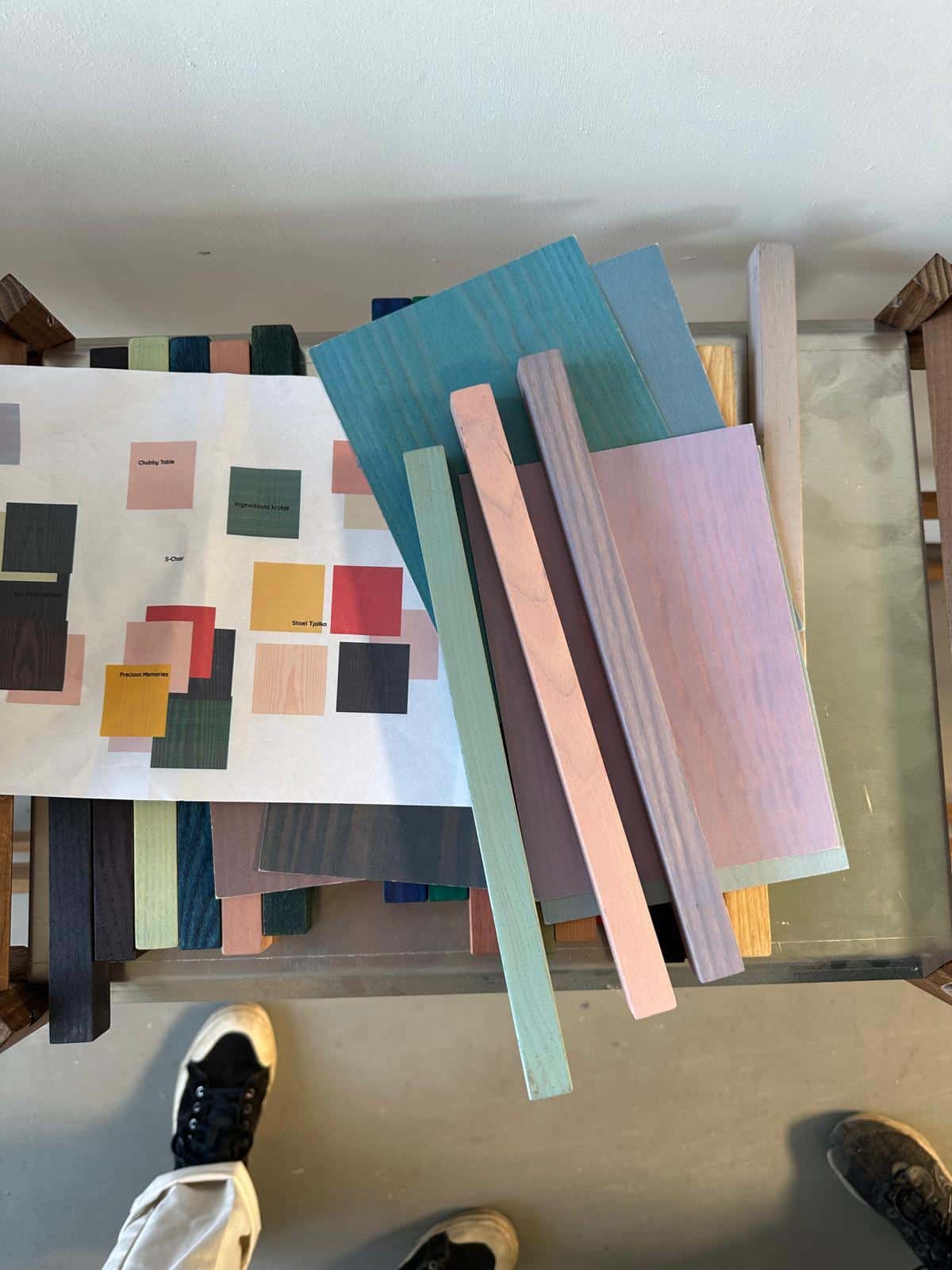
Colour also required careful consideration. With lighter, more transparent finishes, the grain of the wood remained very prominent and started to compete with the shape of the product, making the overall appearance feel less refined. We therefore looked for finishes with greater coverage, allowing the shape to speak more clearly while still leaving the natural structure and grain of the wood subtly visible.
Throughout the development process, all of us contributed ideas for possible adjustments. Because we were working directly with models and the milling machines, those ideas could immediately be translated into new versions.
Fynn also spent time with us in the workshop. By working side by side at the machines, we could move even faster: discuss a detail, test it straight away and then evaluate the result with the actual product in front of us. This created a direct rhythm of thinking, making, testing and adjusting, making the development process very tangible.
This way of working suits both KellerFreyschmidt and Vij5: by looking, making and trying again together, the final product gradually took shape.
CREATE
Papeterie may look simple in construction, but that simplicity requires precision. The angle of the back, the proportions of the different parts and the spacing and depth of the ribs all determine how the product functions.
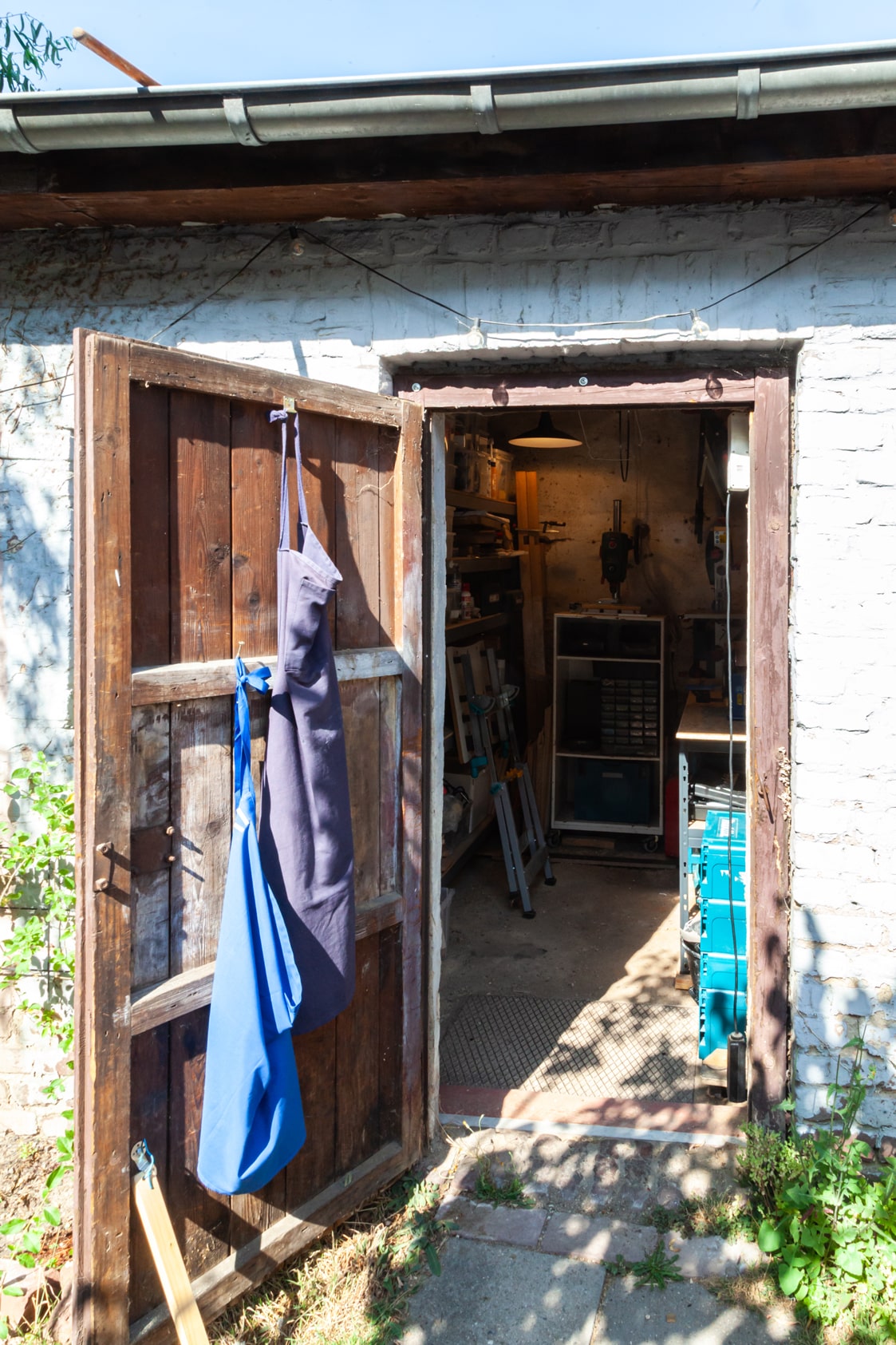
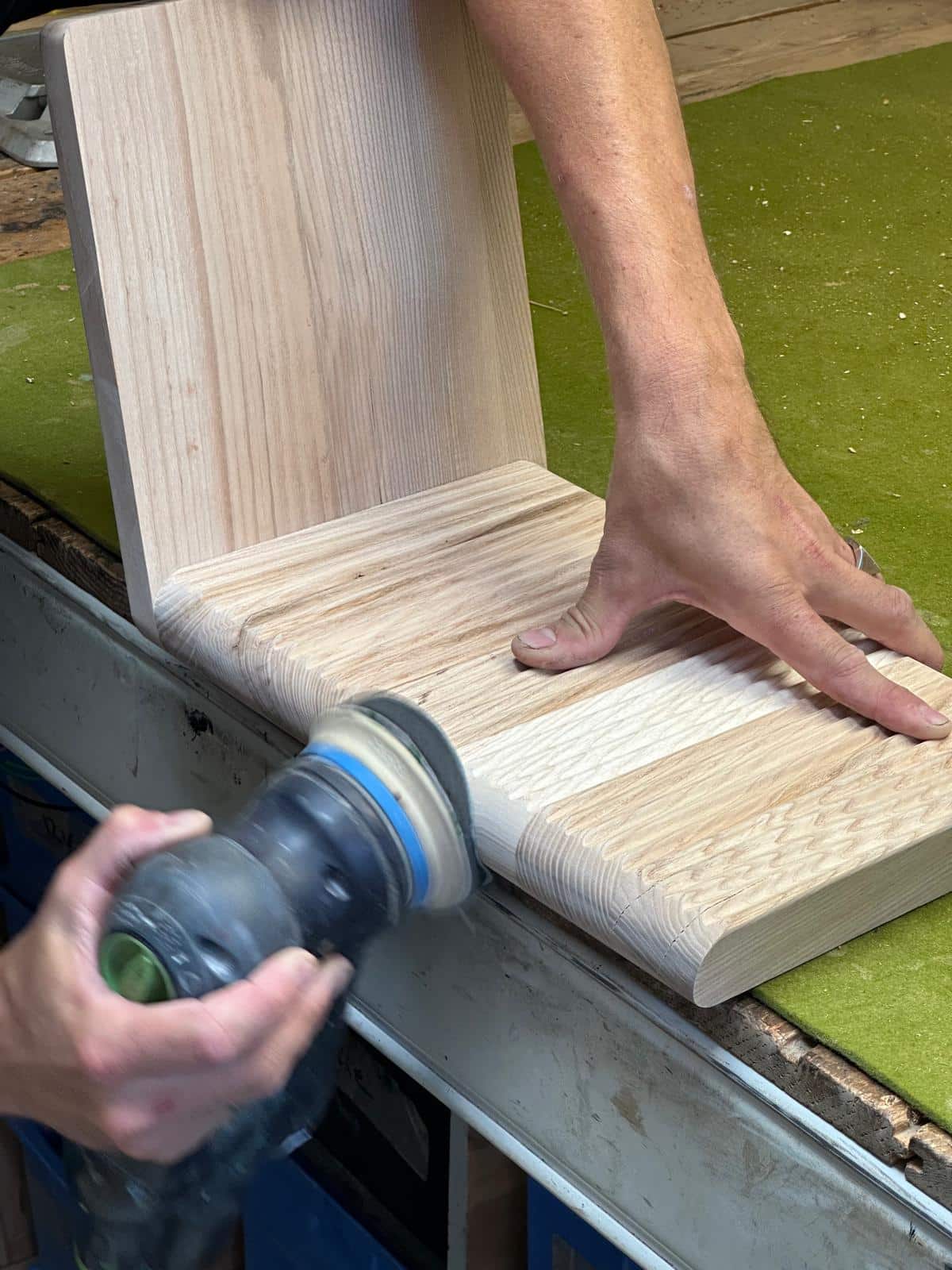
Papeterie is made entirely in our own workshop in Den Bosch. We use solid ash, which we shape using several different milling machines before finishing each piece by hand.
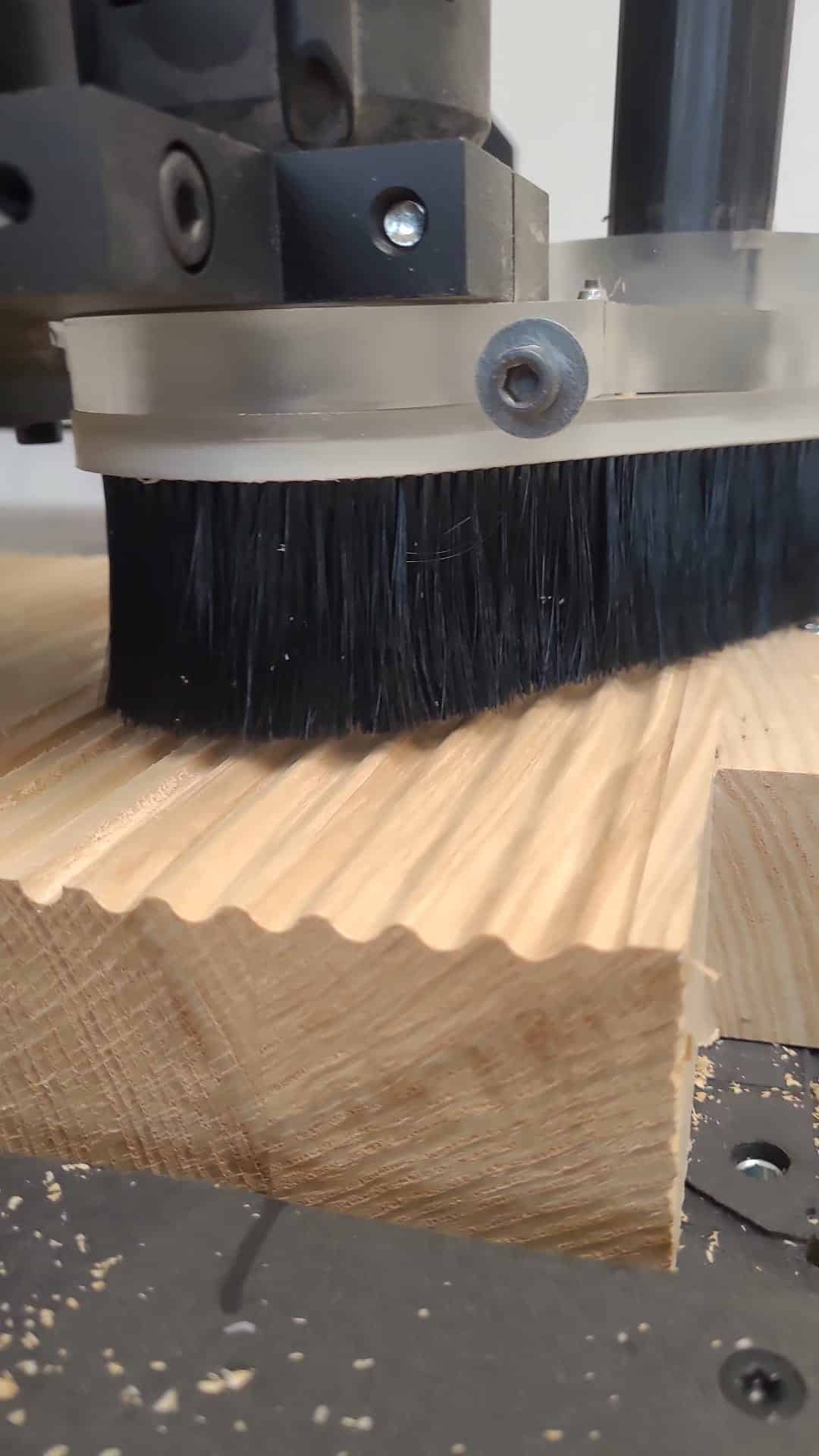
The ribbed structure of the base is created on our CNC milling machine. The grooves are slowly milled into the wood layer by layer, creating an accurate and even pattern. The outer edges are then rounded on a different milling machine. The back panel is also cut to size in our workshop.
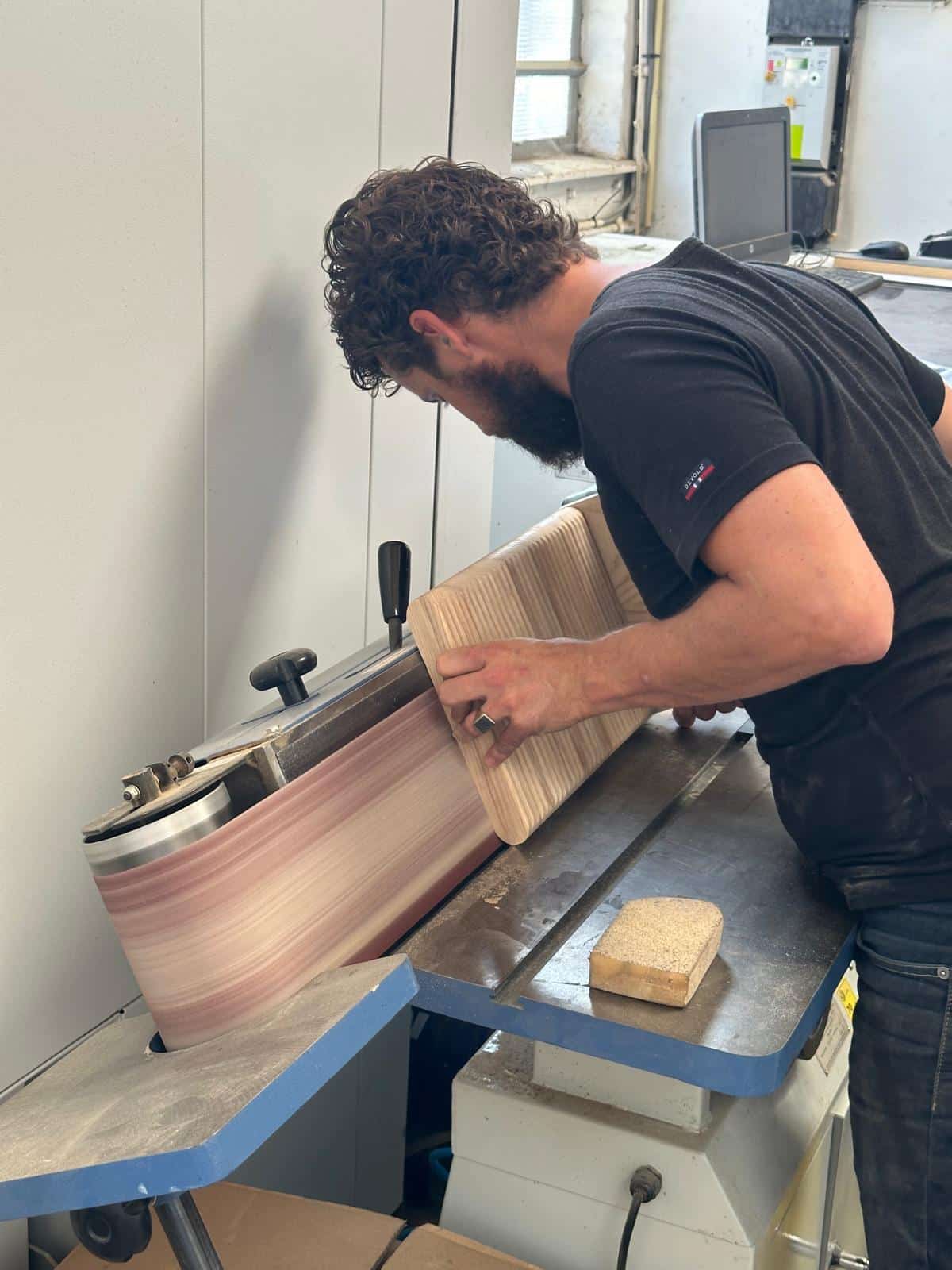
All parts are then carefully sanded, glued together and finished with pigmented linseed oil. The oil protects the wood and gives the surface a matt appearance, while allowing the natural structure of the wood to remain subtly visible.
Papeterie is available as standard in black and dove blue [and possibly brick red]. Other colours are available on request at an additional cost. Feel free to contact us for more information.
Because we carry out the entire production process ourselves, we remain closely involved with the product and can monitor the quality at every stage.
"You can’t separate a product from the way it is made. Production is part of the design."
Lisa Keller
In the material passport you can find where and by whom the different parts of this product are made.
MATERIAL PASSPORT
Papeterie
Wood
FSC Solid Ash Wood
, thicknesses 17 and 35 mm
Dimensions
40 x 23 cm and approximately 25 cm high
Colours
Finished as standard with Satin Wood Oil from Denmark in the “ colours ” shades: Purple-Blue (35 / Toulouse & 36 / Cairo), Black (15 / Dublin), or Brick Red (48 / Bilbao). Other “ colours ” shades are available upon request.
Production
All production, assembly, and finishing take place at the Vij5 workshop in Den Bosch (NL).
Packaging
Custom-made brown cardboard packaging made from 80% recycled cardboard, produced in the Netherlands
Part of the Vij5 collection since 2026


SHARE
Would you like to see this product in real life?
Come visit our showroom in Den Bosch or stop by one of our ambassadors or other retail locations. Be sure to check in advance to see if they actually have this item in stock—not all retail locations carry the entire collection.
In need of larger quantities or considering it for a project?
Please contact Arjan and request a quotation here.

Vij5 webshop
All Vij5 products can of course also be ordered directly from our own webshop:
Vij5
Showroom

At our studio in Den Bosch, near the home furnishings district and just two minutes from the A2, everything comes together: showroom, workshop, warehouse, and office. Most of the products from the Vij5 collection are on display here.
Our showroom is still under construction, but you’re, of course, more than welcome to visit. Please contact us in advance and let us know which products you’d like to see, and we’ll see what we can do.
You can easily make an appointment by email or phone.