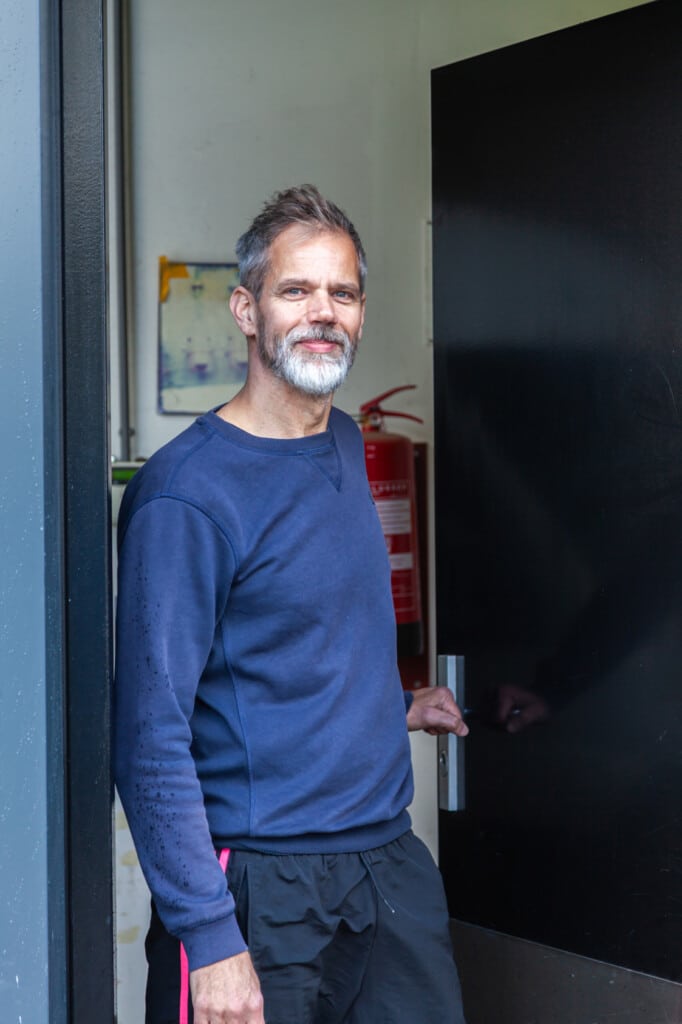
Tjalko Lokhorst is a designer and furniture maker. Ever since he was a child, he has had a special love for chairs. He prefers to work with wood and pays close attention to how a piece of furniture is made. His eye for detail extends even to the parts you don’t immediately see. Design His creations appear simple, but their development by involved a great deal of experimentation and refinement. The “Tjalko Chair” could be considered the signature piece of his work. This design has been with him for years and, with a New twist, has earned a place in the Vij5 collection.
October 2026
Text: Daniëlle van de Haterd
Photography: Vij5
“You keep improving yourself over and over again. With every version you create of something, you carry something over from the previous one.”
Tjalko Lokhorst
Space to Create
Tjalko spent most of his childhood by in Middelie, a small village near Purmerend. He describes himself during that time as a fairly quiet child who liked to do his own thing. Outside, there was plenty of space to build, so he would create and come up with all sorts of things: huts, a circus, and even a carnival. Chairs were also part of his “work” back then. “I made them out of particleboard and scrap wood. I was very proud of them, even though they weren’t comfortable at all.”
At a LOM school, Tjalko was given the opportunity to develop his talents. That would have been unthinkable at his first elementary school. “The regular elementary school in the village was pretty old-fashioned. I had dyslexia, and they didn’t know what to do with me, so they often set me apart with headphones on. It wasn’t until I went to the LOM school in Edam that I really came alive. There, I was allowed to do what suited me and could discover what I was good at.”
Creativity at Home
You could say that Tjalko grew up in a creative environment. “My mother used to be a ballet dancer and my father a photographer. That was before I was born, so I didn’t really experience it firsthand, but I could sense it.” After Tjalko was born, his father traded the arts for a more commercial job in the graphic design industry. His mother took care of him and his younger brother and sister. There wasn’t a furniture maker in his immediate circle, but he did pick up the idea of making things himself from his family. One of Tjalko’s uncles played an important role in that. “He was an artist and often stayed with us. I do see him as a role model; I always found what he had to say very interesting, and he also encouraged me a great deal to build things.”
A teacher who saw it
After elementary school, Tjalko went to the LTS. There, he had an art teacher who meant a lot to him and whom he considers the most important influence on his future career. “There were a lot of kids at that school who had absolutely no interest in class and would rather shoot paper balls by around the classroom. I was different—I was genuinely interested. I think that’s why he was so taken with me and invested in me.”
Tjalko’s interest in chairs was also a recurring theme during his high school years. Instead of taking a part-time job at the local supermarket, he made replicas of the famous Rietveld chair. He sold these, as well as other small pieces of furniture, to earn a little extra money. He also had an interest in architecture. Encouraged b by , his art teacher, he dreamed of making this his career. “When I graduated, that teacher gave me a scale model of the Rietveld Schröder House. That really made an impression on me and meant a lot to me.”
Continuing Education
To pursue his dream, Tjalko moved from the LTS ( by ) to the MTS Bouwkunde, specializing in architecture. During his internship at an architectural firm, he got a taste of what the profession was like in practice. It turned out to be much less of a “hands-on” world than he had imagined and hoped. “It felt to me like there were mostly a lot of meetings and discussions. I really missed the romance of building models and things like that.”
That same internship set Tjalko on a New path. “There was also an interior designer working there who made all kinds of Furniture . I thought: that’s much more fun. It’s nice to be in your own little world and workshop, creating architectural Furniture . That’s when I decided to switch to the furniture design school.”
The combination of technique and creativity made Tjalko happy. What did the program teach him most of all? Knowledge of wood. “I think it’s such a beautiful material—it really has a soul. At school, I learned all kinds of ways to work with it.”
Tjalko really came into his own when it came to making things. He usually finished his assignments quickly, which left him plenty of time and space to experiment with his own projects. “That’s how I really got the hang of it; I made a lot of molds and discovered ways to bend wood.”
“I think wood is such a beautiful material—it really has a soul.”
Tjalko Lokhorst
Designer and furniture maker
Right after finishing his education, Tjalko started his own business. “I’ve actually never worked for a boss, not even when I was younger,” he realizes during the interview.
Does he see himself primarily as a designer or as a furniture maker? “Both.” Even while drawing, he’s already thinking about the wood and how he can work with it. Once in the workshop, the material can inspire him to come up with a different idea. Sometimes, as he’s working, he discovers a solution that he couldn’t have foreseen on paper. Design and making continue to follow one another and feed into each other.
Many of Tjalko’s commissions are for kitchens and other interior design elements. It’s work he enjoys, but it’s not necessarily his greatest passion. “Although I’m certainly proud of what I deliver, this isn’t what I truly enjoy most. But I have to make a living, and everyone needs a kitchen, after all.”
He always continued to create his own Design , even though he often had very little time for it. At age 50, he made a conscious decision to change that. “I realized I needed to make some changes to start enjoying my work again. So I made a conscious effort to start investing in my own Design again.”
“I do seek simplicity, but that’s actually quite difficult. The path to it can be very Wrapped .”
Tjalko Lokhorst
Simplicity as a Starting Point
Tjalko feels that his early work looks completely different from what he creates now. “When I started out, I used a lot more rounded and curved shapes. I hardly ever do that anymore.” He began in the ’80s and was inspired at the time by by , and Philippe Starck, with their expressive forms and soft lines. “Of course, I was still really trying to figure out what suited me.”
Later, Tjalko discovered the work of Maarten van Severen, Donald Judd, and Jean Prouvé, in which subtlety and simplicity play an important role. That approach appealed to him and has since become increasingly evident in his own Design. “You keep improving yourself over and over again. With every version you make of something, you carry something over from the previous one. Sometimes a component can be simplified; sometimes a different proportion works better.”
Focus on the Inside
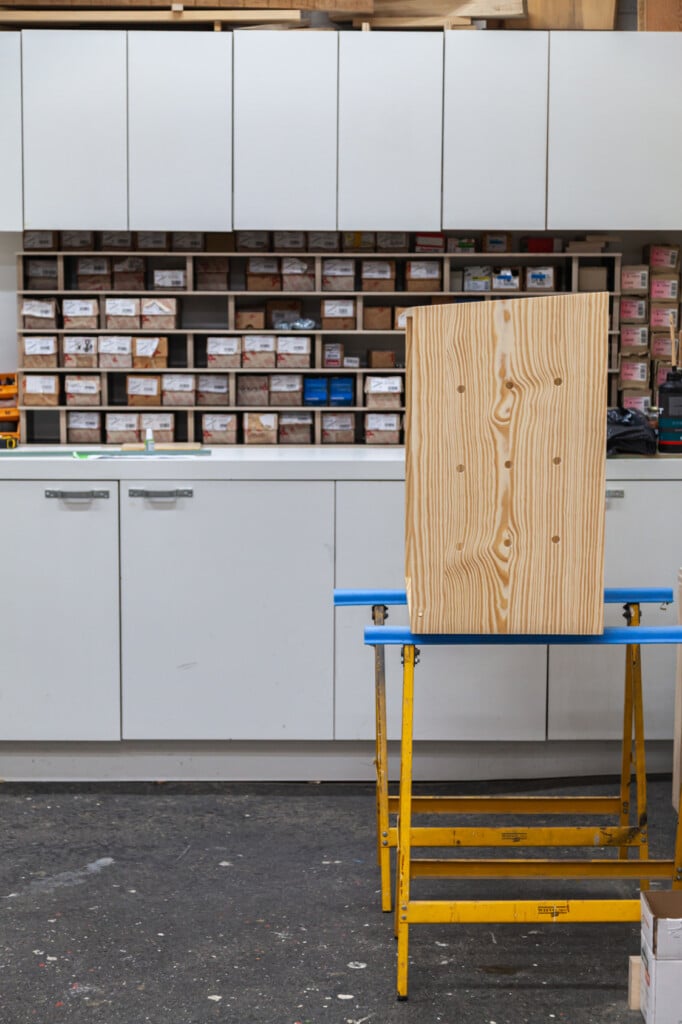
When Tjalko works on commission, the client’s wishes are, of course, the top priority. From there, he begins figuring out the details of the execution. Much of his time is spent on details that aren’t immediately noticeable.
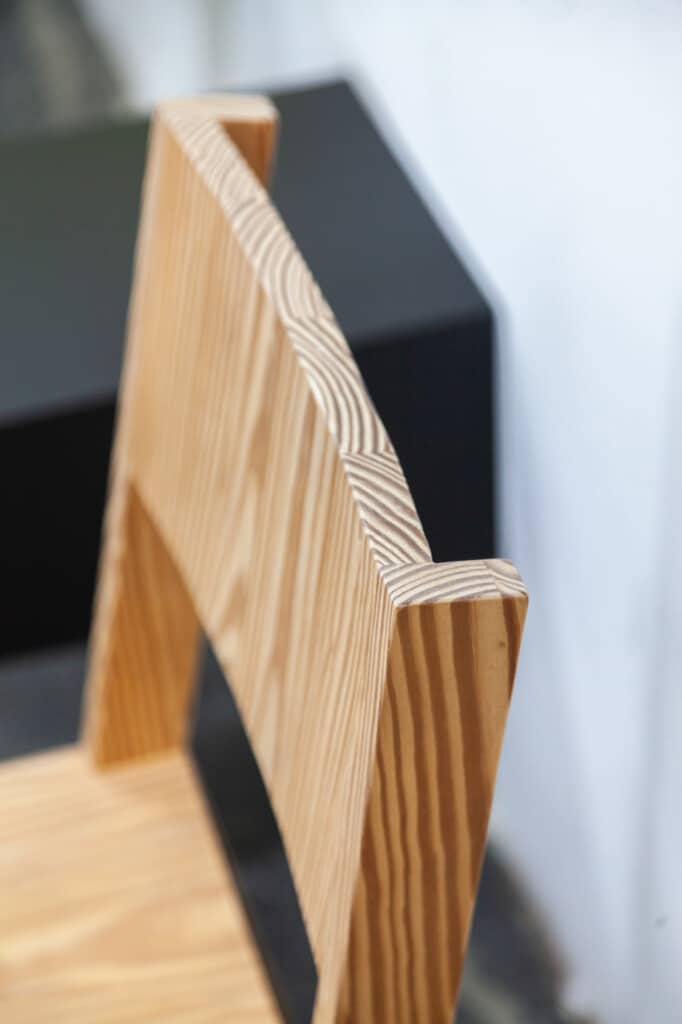
“I pay a lot of attention to details. That could be a joint, but it could also be the finish. For example, when I paint a drawer, I also paint the bottom, and the inside has to be just as beautiful as the outside. If a cord runs through it somewhere, I create a special detail for it. Those are the little things I focus on. I think people can see and feel that.”
That attention to detail starts with the choice of materials. Tjalko prefers to work with wood and does so most often. Which type he chooses depends on the design and intended use. “I definitely prefer solid wood because it really has a soul, but it’s also very expensive and can warp. Sometimes plywood or veneer offers a more suitable solution.”
“I find it hard to say goodbye; I feel like there’s almost always something that could be improved.”
Tjalko Lokhorst
From the Beginning to the Farewell
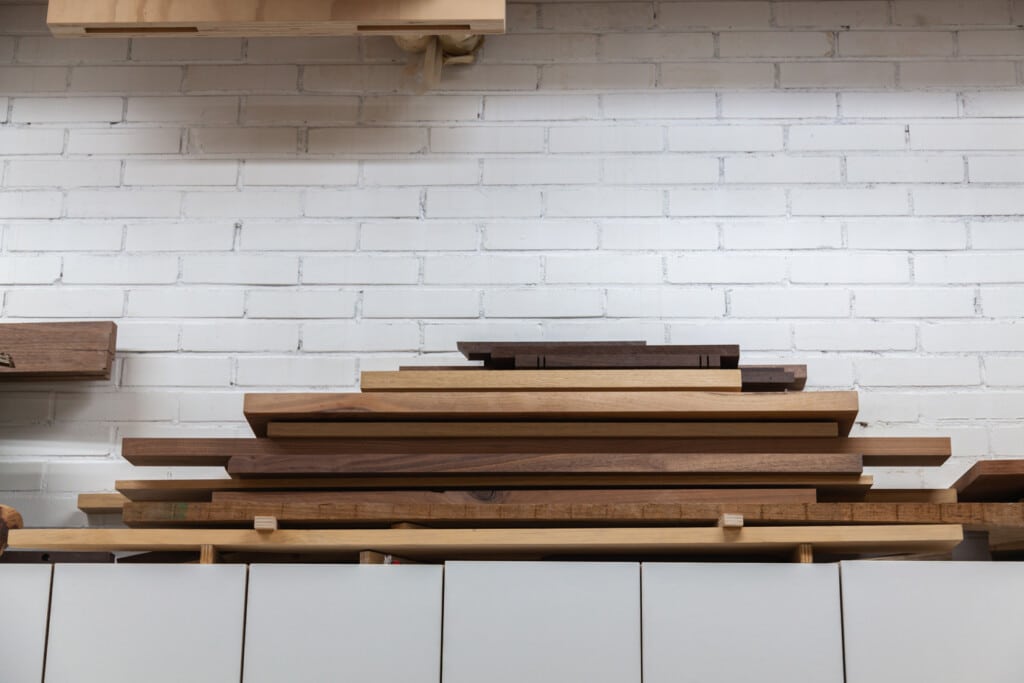
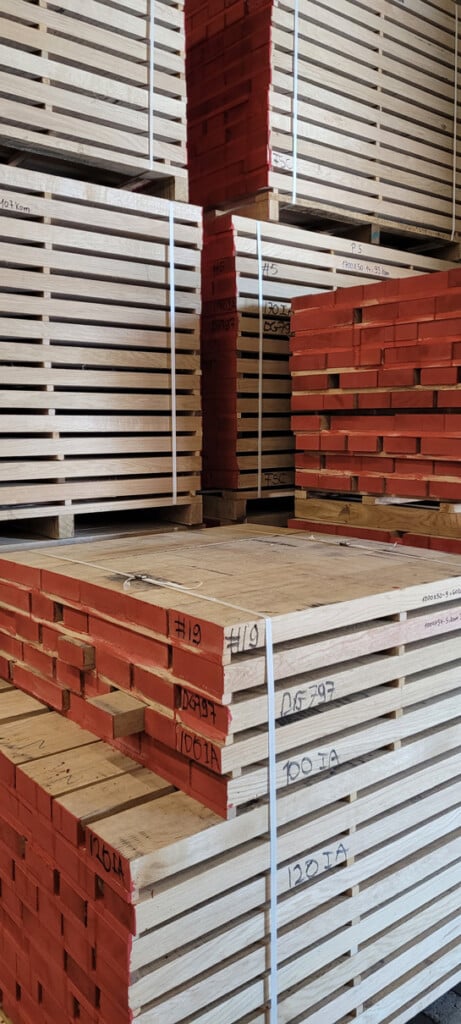
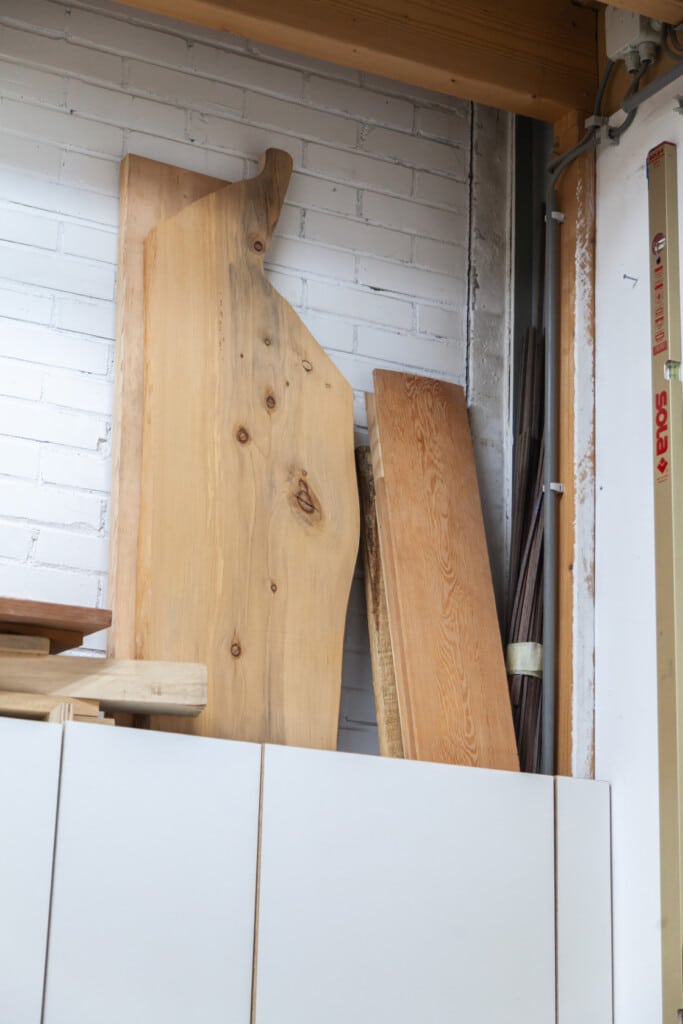
Tjalko actually enjoys the beginning of a project the most. He explains enthusiastically: “Buying fresh materials really makes me happy, especially when I get to go to the lumberyard. When I start planing the wood, I see it come to life, so to speak. Then I sort it so that the ‘flame patterns’ blend beautifully together.” Tjalko is just as passionate when he’s at the home improvement store; quickly grabbing some sheet material isn’t his style. “I don’t just grab the top sheets. I want to make sure I have the patterns that combine most beautifully.” To achieve this, he might just go through the entire stack.
While he really enjoys the beginning, he actually finds the end of a project difficult. “I find it hard to say goodbye; I feel like there’s almost always something that could be improved.” A deadline helps him draw the line. “Without that time pressure, I could keep tweaking it endlessly.”
At Tjalko's house
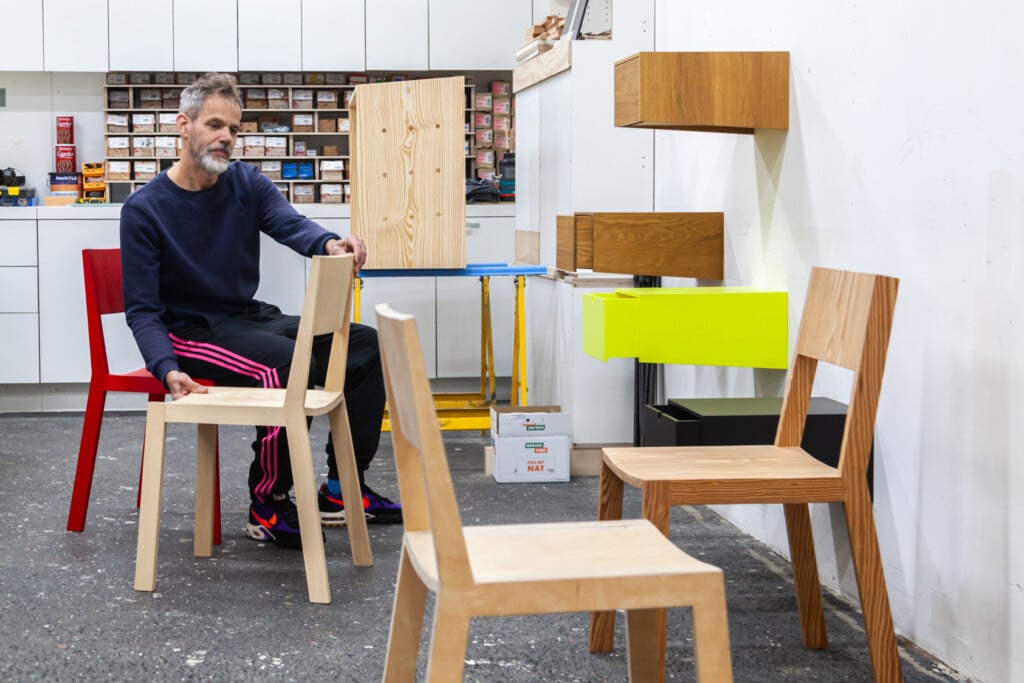
You’ll find many of Tjalko’s pieces in his own home: cabinets, a table, stools, chairs. He enjoys using his “ Furniture ” himself. Sometimes a design already exists; other times, it emerges from something he needs. He makes it, lives with it, and discovers whether it might also be of interest to others. Not everything leads to a follow-up; sometimes it remains a one-of-a-kind piece.
Among his own Furniture are also pieces by other Designers. His favorites are—how could it be otherwise—chairs. For example, he has a Scandinavian armchair from his late parents’ home, which is dear to him because of both its design and the memories it evokes of them. He also mentions two chairs by Jean Prouvé, the shape of whose back legs particularly appeals to him.
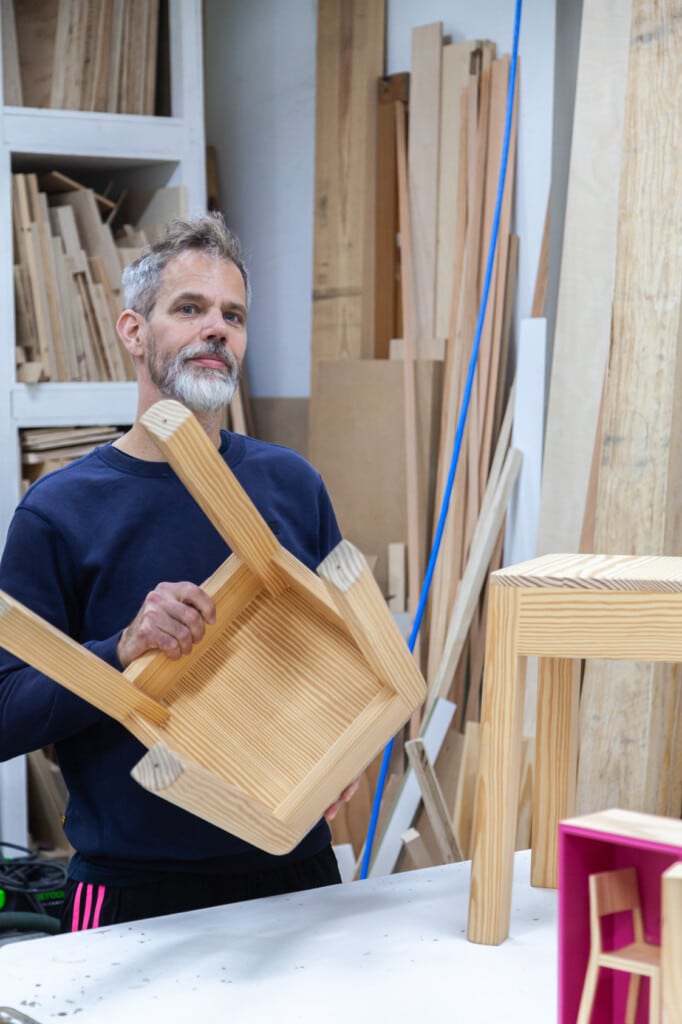
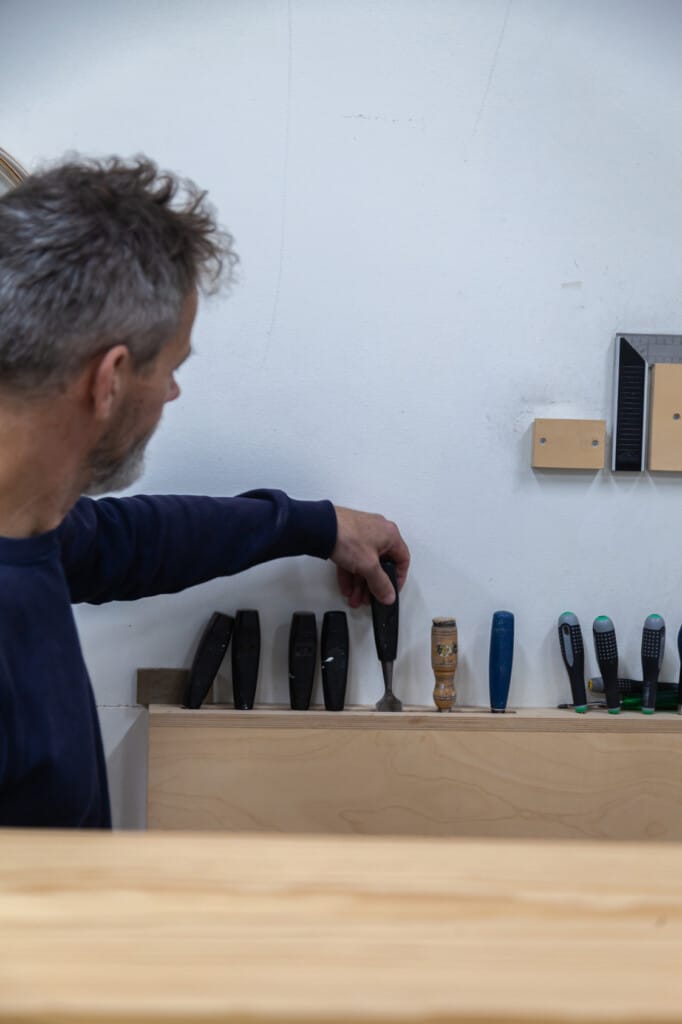
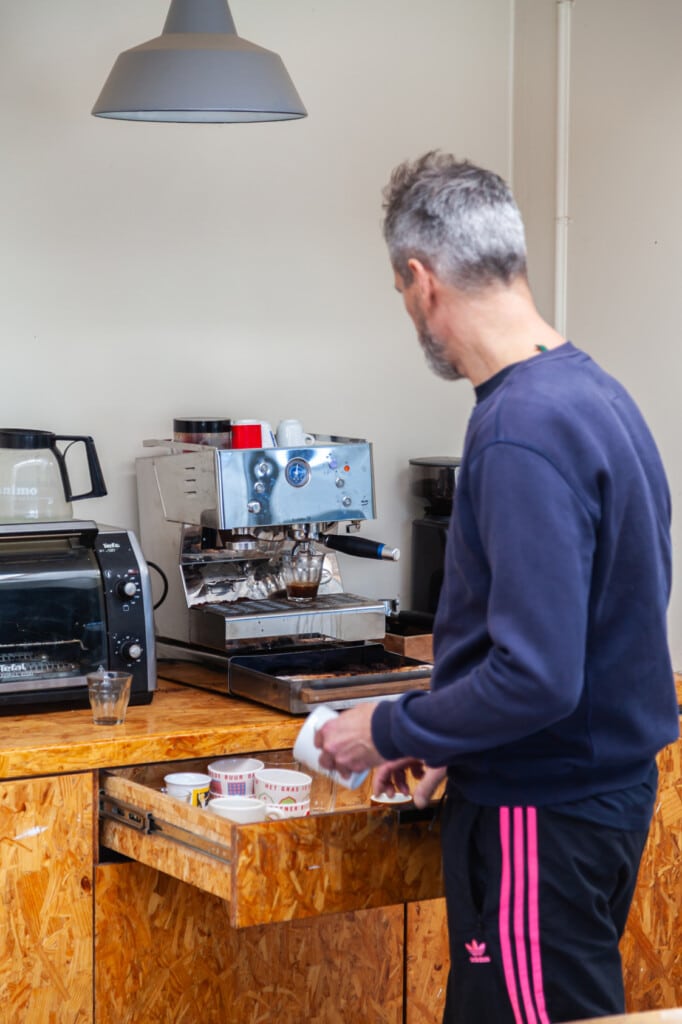
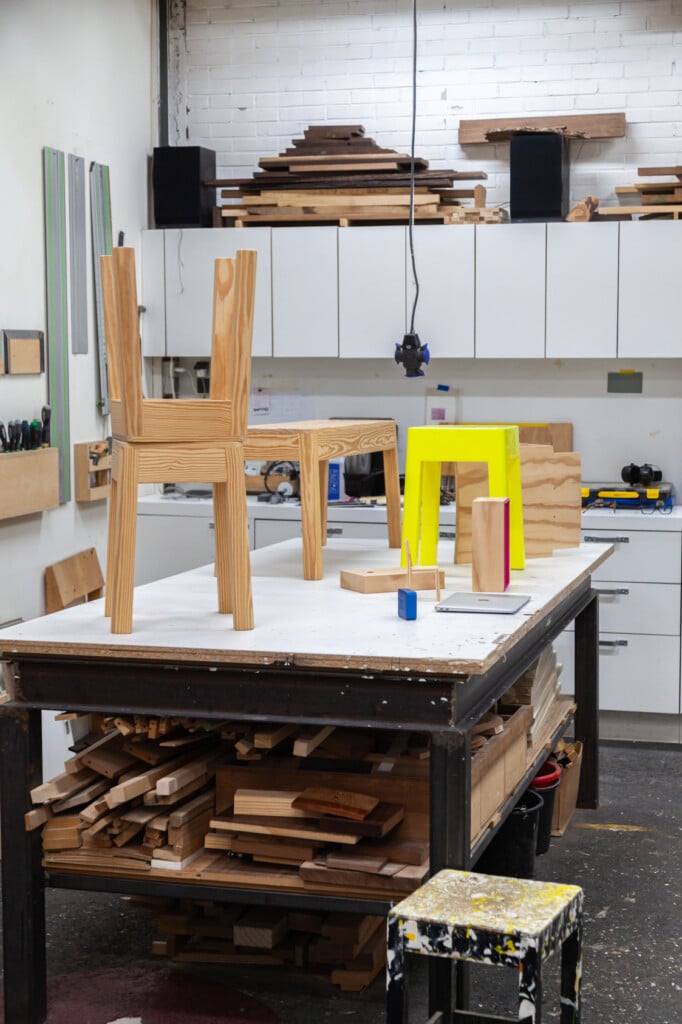
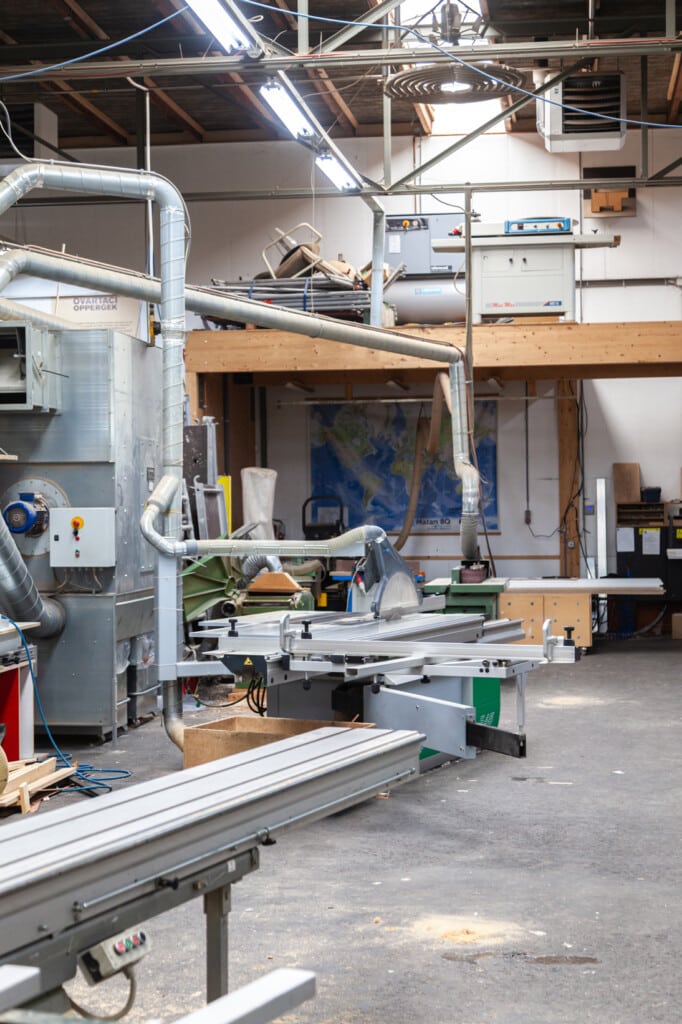
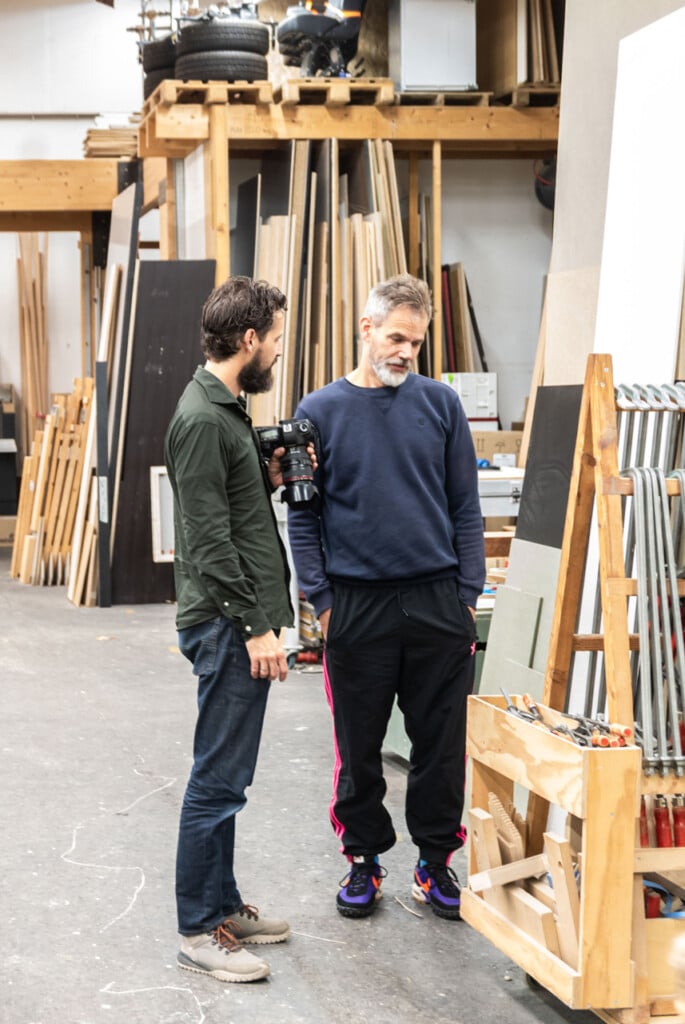
Not only does Tjalko live surrounded by his own work, but his home is also often his workplace. He shares his workshop with other independent artists: each has their own section, and they share the large machines. “For drawing and other tasks that require real concentration, I need peace and quiet, so I prefer to do that at home.”
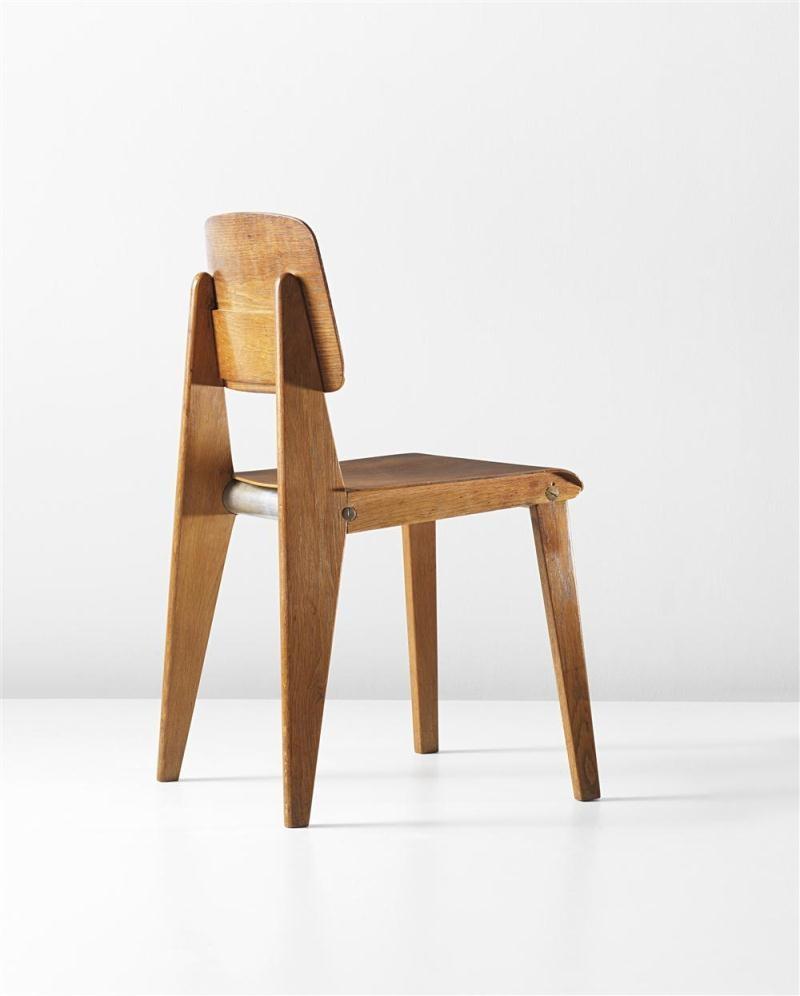 Chaise Bois Démontable CB 22 (1947), ontwerp Jean Prouvé. Foto: Sailko / Wikimedia Commons
Modesty and Simplicity
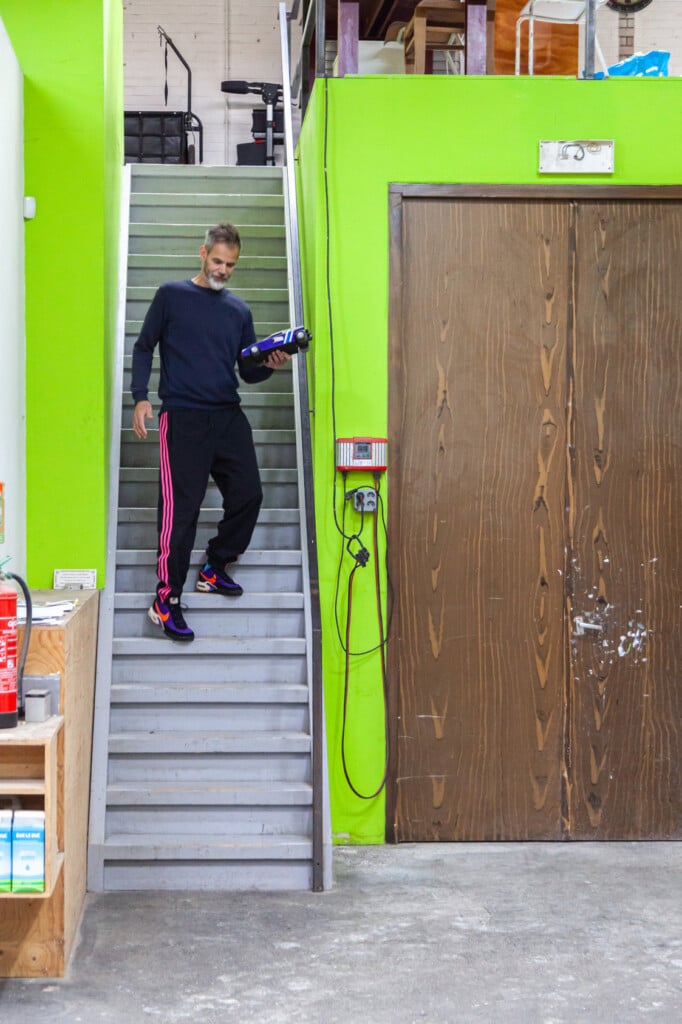
Modesty is one of the words Tjalko uses on his website to describe the style of his Design . Does that trait apply to him as well? He has to think about that for a moment. “Maybe so. It’s not that I’m a very modest person, but I am when it comes to my Design. For example, it’s not my style to stand next to a product while it’s being photographed. There are plenty of Designers who love to do that, but personally, I’d rather all the attention go to the item instead of to me.”
Tjalko prefers to let the furniture speak for itself. He thinks it’s important for people to see not only what it looks like, but also how it’s used and how it’s made. Behind the understated appearance of his Design often lies a great deal of work. “I do strive for simplicity, but that’s actually quite difficult. The path to achieving it can be very Wrapped . Achieving an understated look sometimes requires a lot of trial and error, adjustments, and remaking.”
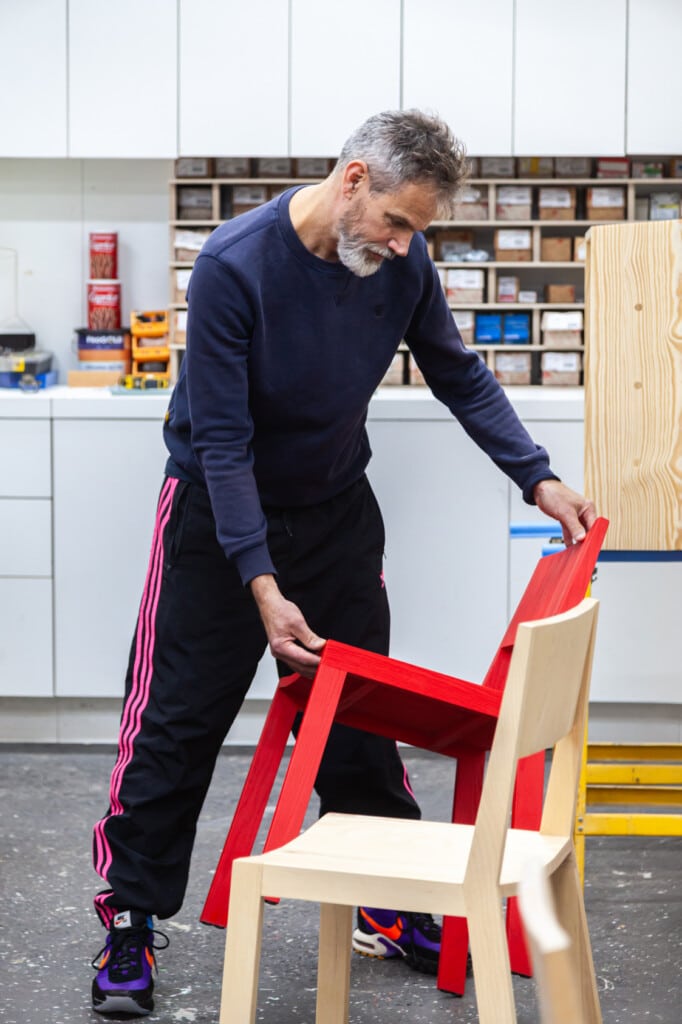
“Achieving a calm look sometimes requires a lot of trial and error, adjustments, and reworking.”
Tjalko Lokhorst
Tjalko Chair
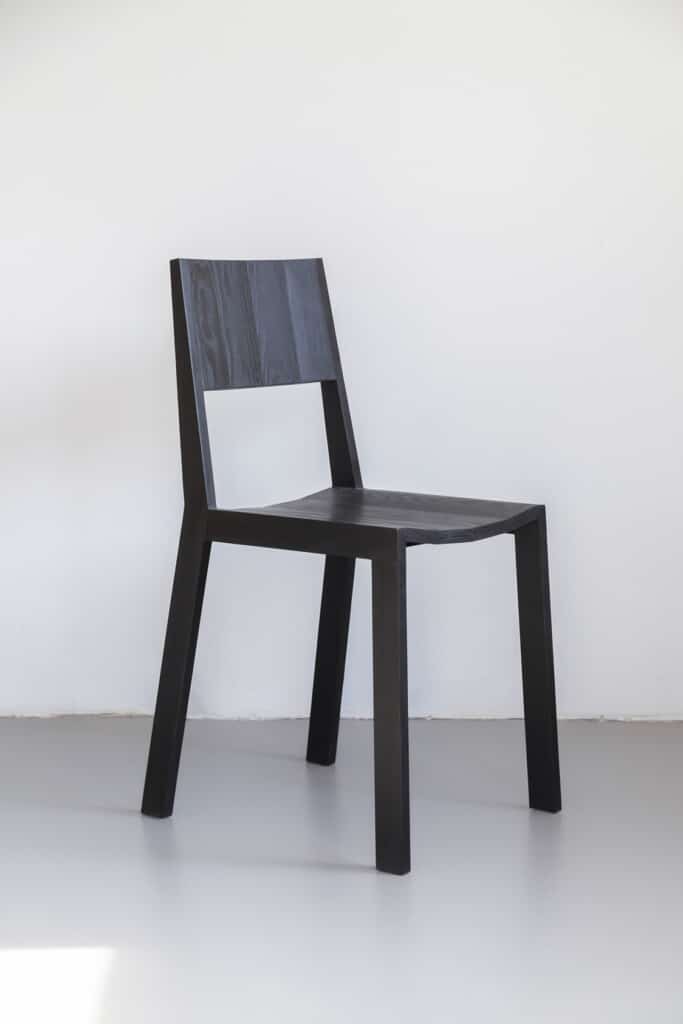
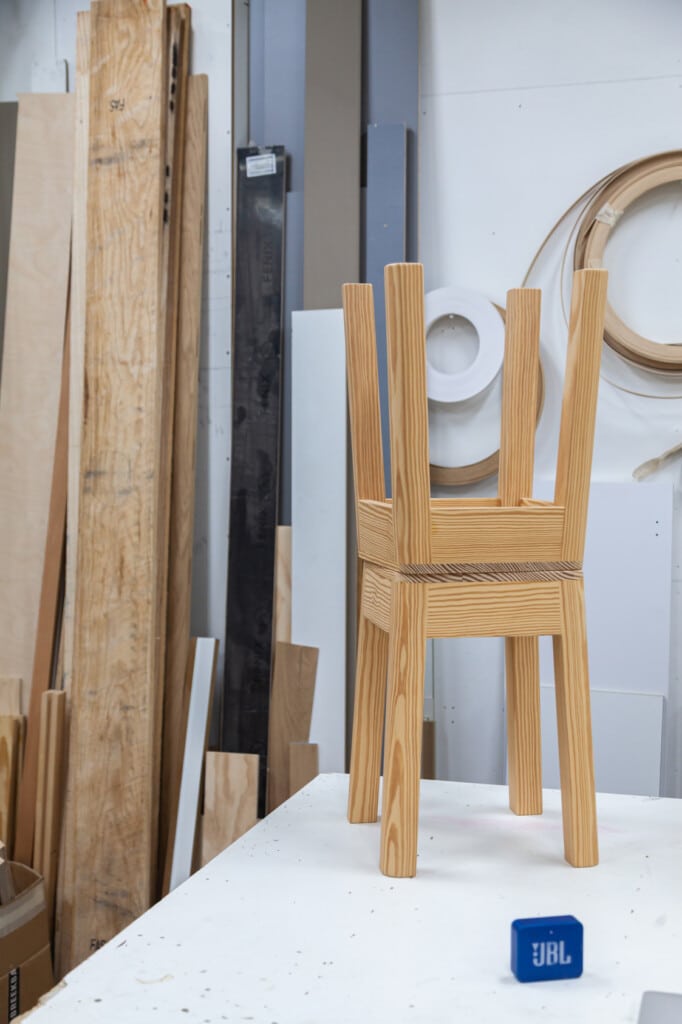
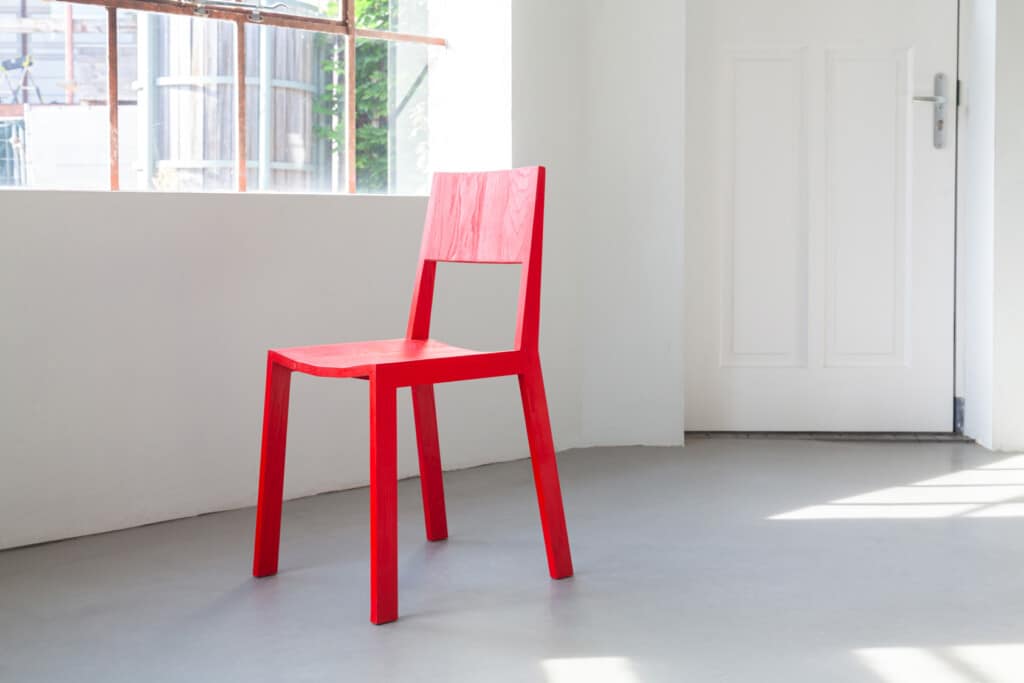
Of all the things he has ever created, Tjalko considers the “Tjalko Chair” to be the design that best represents his style. He began working on it shortly after he had set up his own workshop. Jasper Morrison’s “Plywood Chair” and Jean Prouvé’s “Chaise Bois Démontable” served as his sources of inspiration. “I was particularly drawn to their simplicity. Based on that, I wanted to create a new design language.”
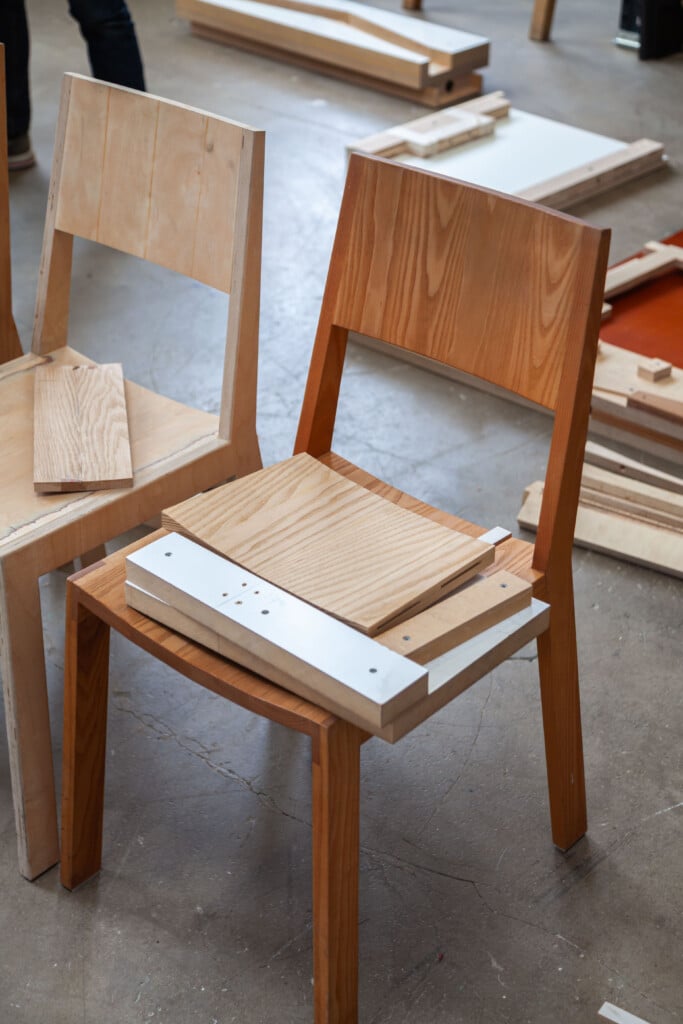
“I spent a long time working on the comfort of that chair, making sure it sat well.” In addition, Tjalko sought a simple way to create the curve of the seat. He found it by by cutting the individual wooden Share at a specific angle. This way, the shape emerges from the very process of making the chair—something that is characteristic of his work as both a designer and a furniture maker.
Over the years, the chair has been produced in various versions and used for different purposes. For example, some were placed in the rooms of the Lloyd Hotel in Amsterdam.
How the “Tjalko Chair” Became Part of the “ Vij5 ” Collection
Tjalko’s girlfriend is an interior designer (Studio RIANKNOP). For the redesign of the Verkadefabriek in Den Bosch, the “Tjalko chair” was the perfect choice for the conservatory. However, they needed many more chairs than Tjalko could make himself. “I just don’t have the time.”
That prompted me to look for a company that could handle the production. After talking with several candidates, Vij5 stood out. “I immediately clicked with Arjan and Anieke. I’m drawn to personality, and I discovered that they used an interesting oiling technique to colours the chairs. They saw what I saw. They were very enthusiastic and passionate.”
The partnership gives Tjalko the freedom to do what he loves most: Design and create. “Personally, I just don’t have the desire or the skills to organize a large-scale production. Nor does my network, for that matter. Vij5 has everything it takes to make this possible.”
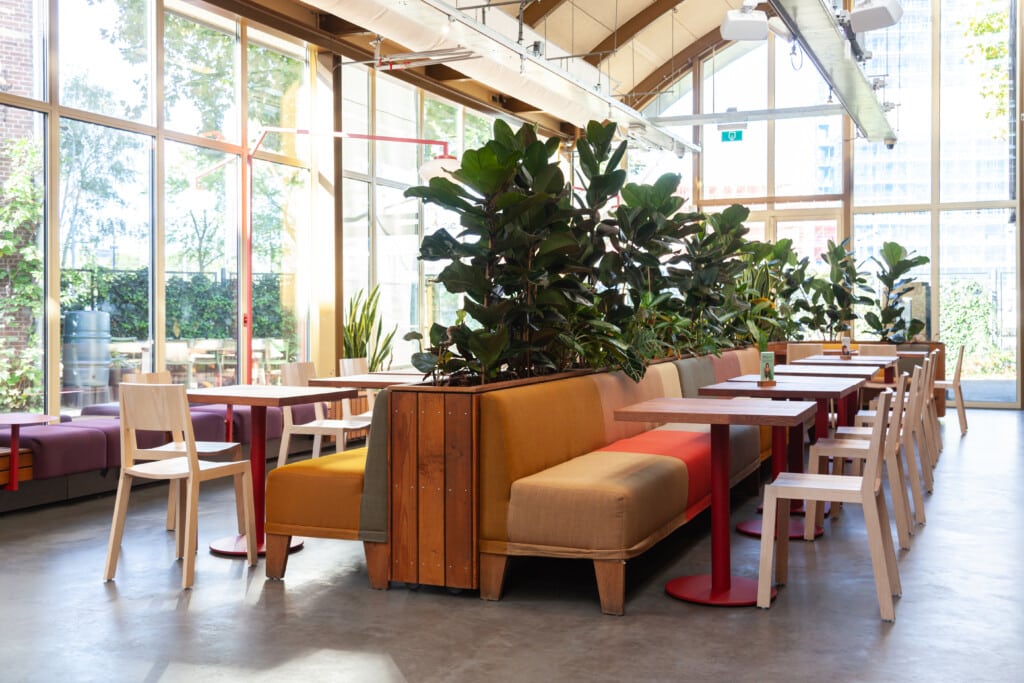 Verkadefabriek Den Bosch, ontwerp: studio RIANKNOP, fotografie Vij5
“Arjan & Anieke saw what I saw. They were very enthusiastic and passionate.”
Tjalko Lokhorst
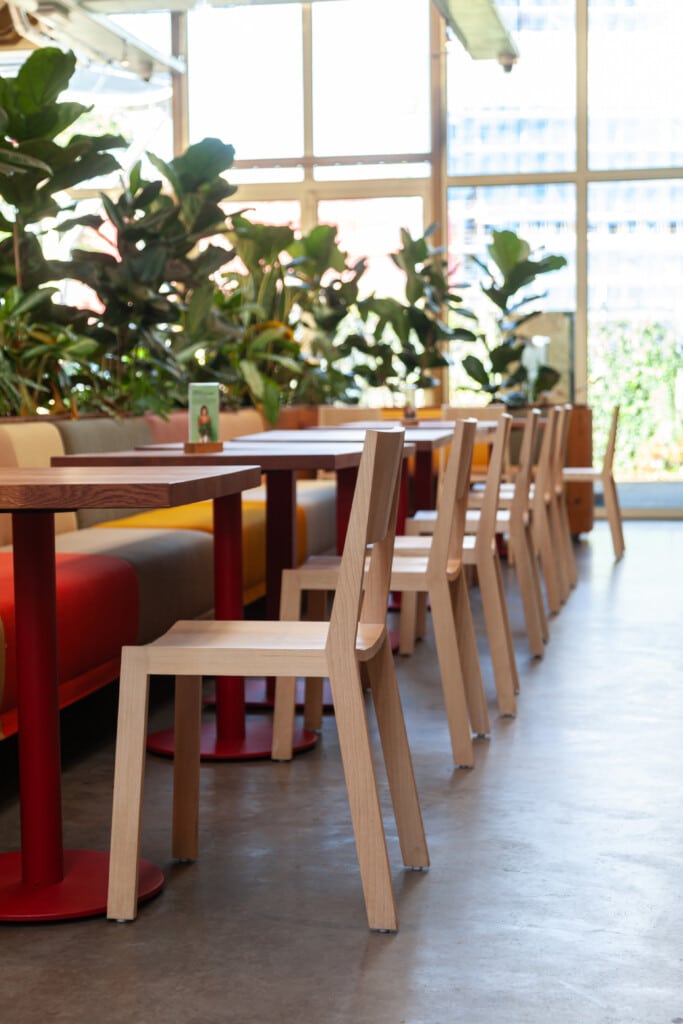 Verkadefabriek Den Bosch, ontwerp: studio RIANKNOP, fotografie Vij5
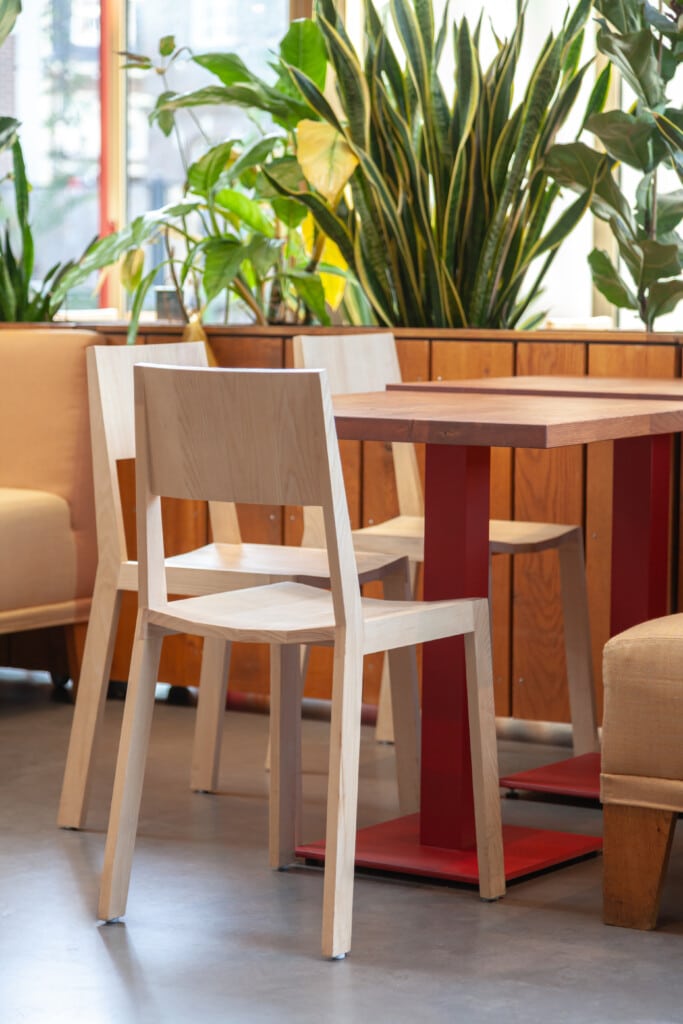 Verkadefabriek Den Bosch, ontwerp: studio RIANKNOP, fotografie Vij5
Continuing to Develop Together
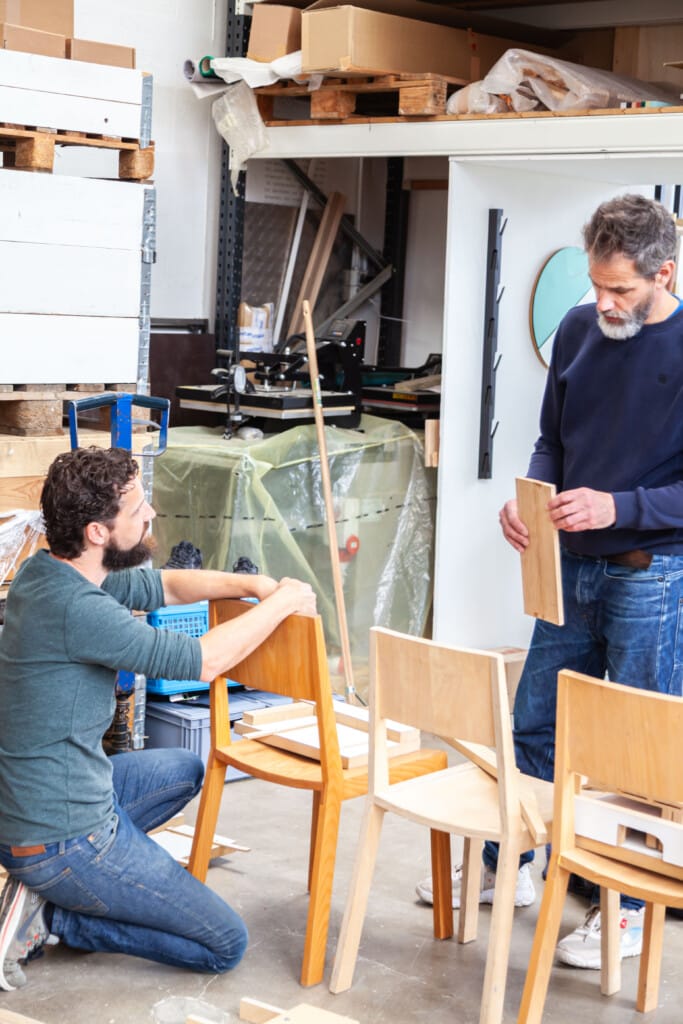
The original design was, and remained, the starting point for the collaboration with Vij5. Above all, the “Tjalko Chair” had to remain the “Tjalko Chair,” retaining the shape and character that make it so distinctive. At the same time, the need for larger-scale production and its use at the Verkadefabriek called for a number of adjustments. Tjalko, Arjan, and Anieke worked together to determine what was needed and how they could achieve it while preserving the original design. Through consultation, they further refined, among other things, the connections between the front legs and the seat of the chair.
The manufacturing process has changed slightly. Parts that Tjalko used to cut out of a plank himself and then finish by hand can now be milled by machine. “But fortunately, there’s still a lot of handwork involved.”
“Even though it’s a different chair than the one I make entirely on my own, it still has the same character.”
Tjalko Lokhorst
A New Look
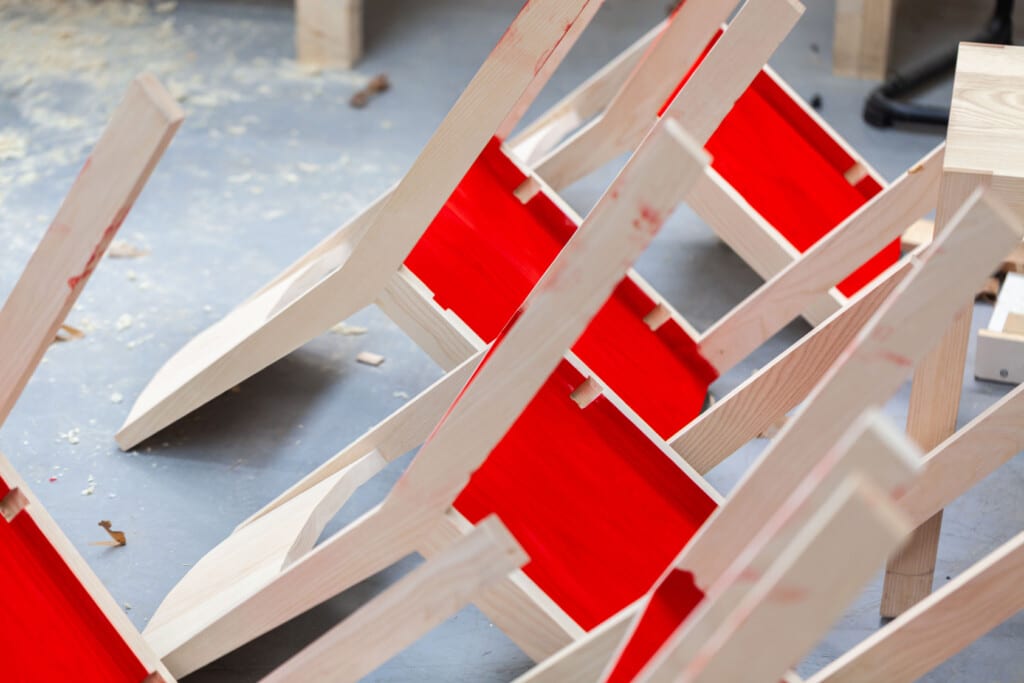
In addition to the technical modifications, the chair was also given a “ New ” makeover. The flamed ash wood and the “ colour ” finish give it a different look, while the curves in the seat and backrest remain recognizable. This gives the design a fresh look while preserving Tjalko’s distinctive design language.
Tjalko really wanted to paint the chair in the “ colour ” style, while preserving the wood grain to which he pays so much attention. He succeeded in doing so using linseed oil, the oil painting technique that had so appealed to him when he first discovered Vij5 .
For Tjalko, having others make his “ by ” chair feels a bit like watching his baby fly the nest. “It was nerve-wracking to hand so much over to others—I’d never done that before. But it was truly a collaboration where everything was done in consultation, so it feels right. Even though it’s a different chair than if I’d made it entirely on my own, its character has remained the same.”
Space for personal projects
Tjalko would like to devote even more time to his own Design in the future. “I just really enjoy making models and experimenting with all kinds of shapes and structures.”
Ultimately, he dreams of a place where he can work on his own projects with complete freedom. “Someday, I’d like to move into a large wooden barn where I can walk in each morning with a cup of coffee. There, I’ll create free, independent work—out of wood, of course.”
"What form that work will ultimately take is still completely up in the air—and for Tjalko, that may be precisely what makes it so appealing..."
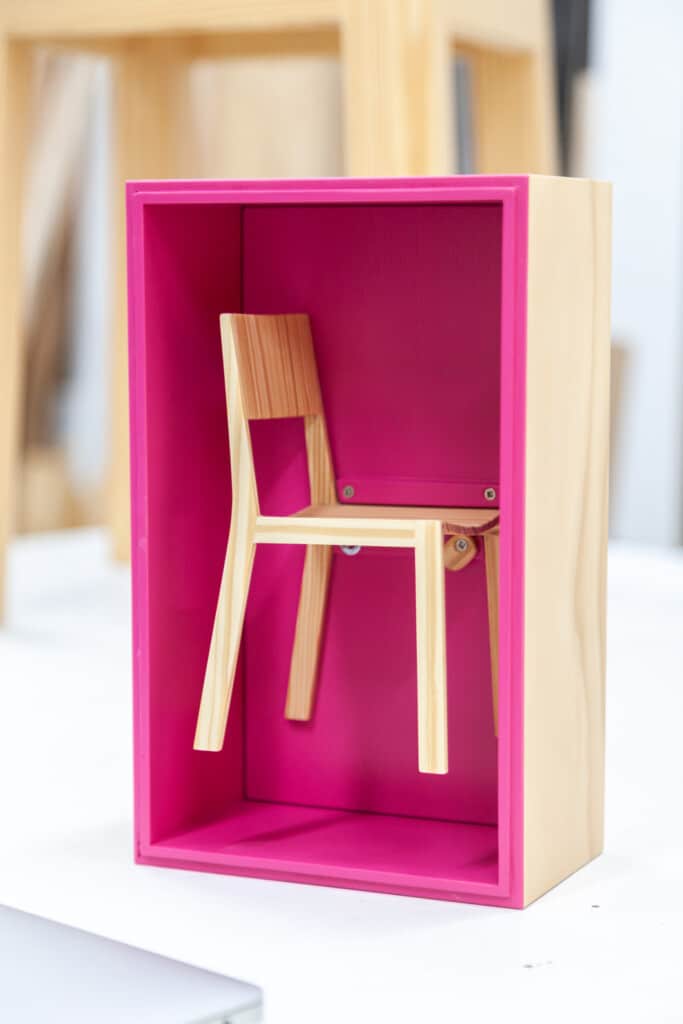
Products by Tjalko Lokhorst in the " Vij5 " collection
-
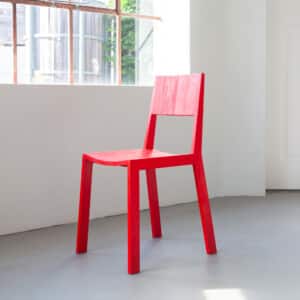 Tjalko Chair | Solid Ash Wood Design ChairPrijsklasse: € 429,00 tot € 549,00